In “Fantastic Ruins,” learn about a half-day walking route right outside Cusco that allows you to visit the Tambomachay, Puka Pukara, Q’enko and Sacsayhuaman ruins (and the Cristo Blanco statue, if you please). If you’re looking for information on Machu Picchu, you can visit my Machu Picchu guide here.
Every destination has its “thing.” In Italy, it’s endless basilicas; Southeast Asia temples. In Peru, Incan ruins meet this criterion.
How do you enjoy the Peruvian ruins without getting “ruins fatigue”? You don’t go to Peru just to skip Machu Picchu, but when you’re limited on time and budget, how do you know what other ruins are worth the energy?
The short answer is that they’re all worth the energy. The long answer is that you should see which meet your priorities.
For us, our priority was minimizing time on the road once we hit Cusco.
Many Incan ruins lay in the Sacred Valley, which, at its closest is about 12 miles from Cusco. To explore areas like Pisac or Moray and Maras (both of which are supposed to be wonderful), you need to block out several hours, 2-3 of which are in the car or travel bus.
But there are also options closer to Cusco. In fact, there’s a wonderful opportunity for a half-day walking adventure right in Cusco’s big back yard.
The most famous of the Cusco ruins is Sacsayhuaman (pronounced “Sexy Woman”), which sits a short walk (or taxi ride) from the top of Cusco’s historic San Blas neighborhood. The busiest (and largest) of the ruins, most people seem to make a stop here during their visit. But there’s also Tambomachay, Puka Pukara, and Q’enko, each of which hold their own charm and history.
Walking Tour of Cusco’s Ruins
The Plan
1. Meet up at 9:30 a.m. with our new travel companions, Erland and Mona, with whom we had bonded in Arequipa.
2. Hire a car to take us the 15 minute drive to Tambomachay, the farthest of the historical sites.
3. Leisurely walk back toward the city.
The Route
I had mapped out our route earlier and found that it would – reassuringly – be nearly impossible to get lost. From Tambomachay, it would be an easy but long downhill walk toward Cusco via a single main road, along which we would see, in order: Tambomachay, Puka Pukara, Q’enko, and Sacsayhuaman.
We expected it to take us about four hours to get from Tambomachay all the way back down to the Plaza de Armas in Cusco’s tourist center, allowing time at each stop, but, in reality, it took us more like five hours.
Make sure you pack plenty of water, snacks, rain gear if it’s the wet season, bug spray and sunscreen (no matter what season it is). You’ll also need cash and your passport if you want to buy your Tourist Ticket at Tambomachay.
Of note is that the road (28G) didn’t always have adequate walking space. Drivers in Peru drive fast, and you should stay aware of your surroundings. We spent a decent portion of time walking in drainage ditches to avoid being on the road.
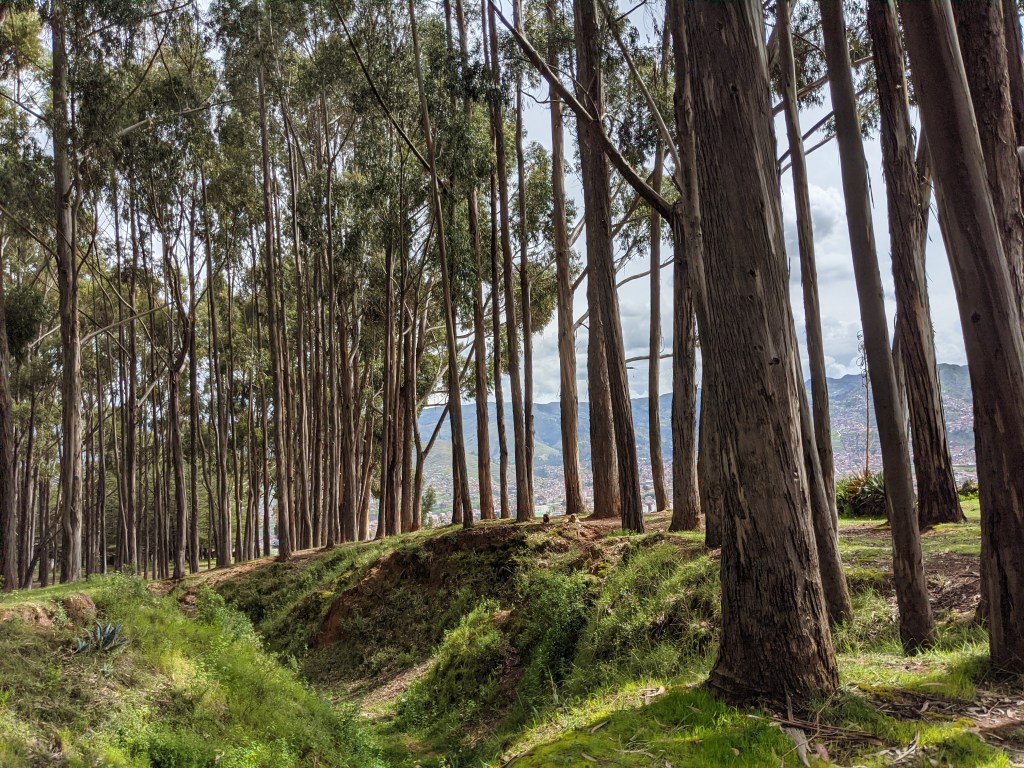
The road isn’t necessarily the most scenic walk, but it wasn’t as unscenic as I had been led to believe. We explored a beautiful wood just off the road at the far end of the Sacsayhuaman archeological site, passed by farmlands, and meandered past a small town.
If you choose to do the walking tour of these sites, I recommend you take a car to Tambomachay rather than walking up hill from Sacsayhuaman. There are two reasons for this: 1. You’ll be walking downhill, which is much preferred in the heat and 2. You’ll end at Sacsayhuaman, which is a nice grand finale.
Alternatively, if you don’t have the mobility for walking the whole way, our Uber driver offered to wait for us and take us to the sites one by one. This still would have been cheaper than a guided tour.
Tambomachay
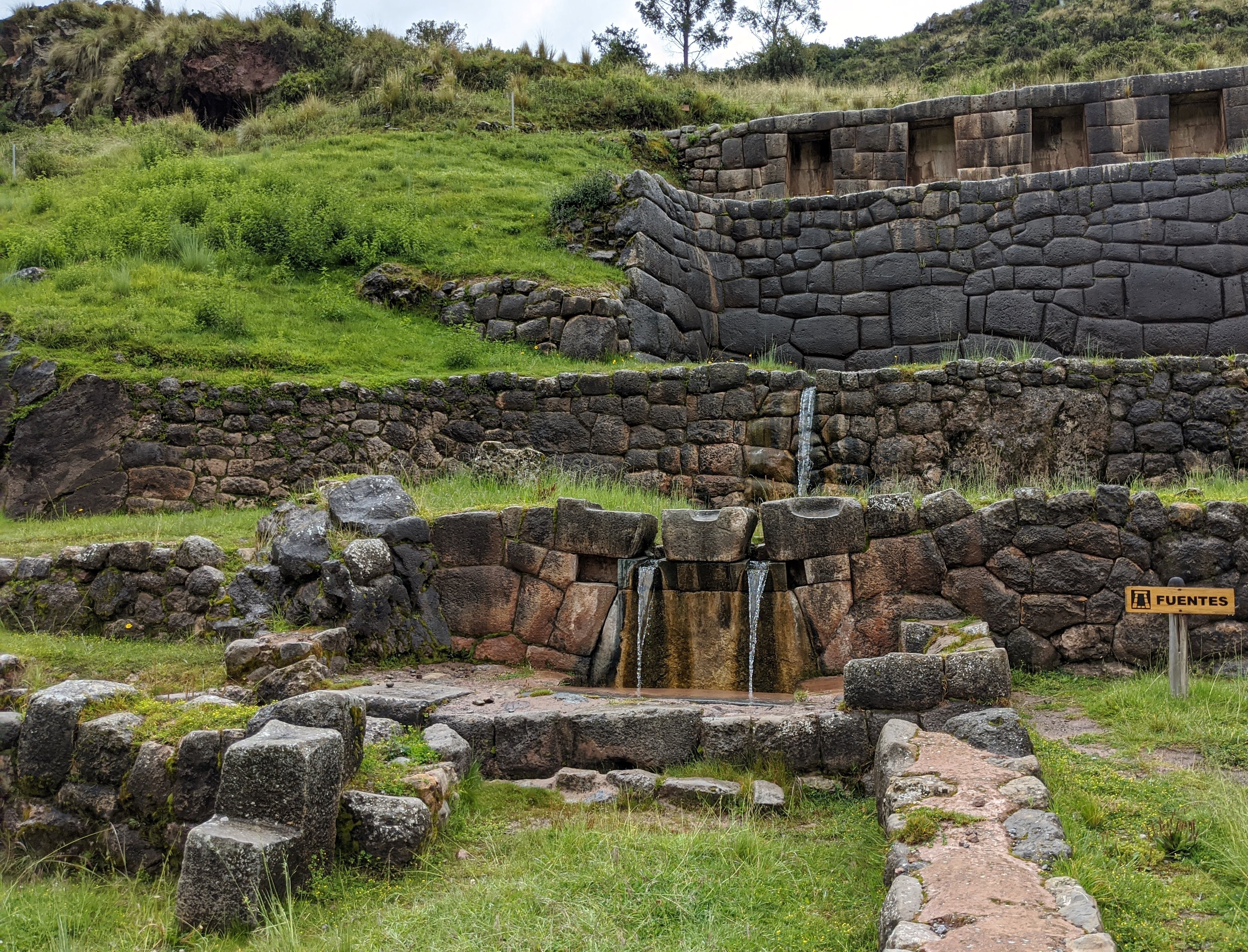
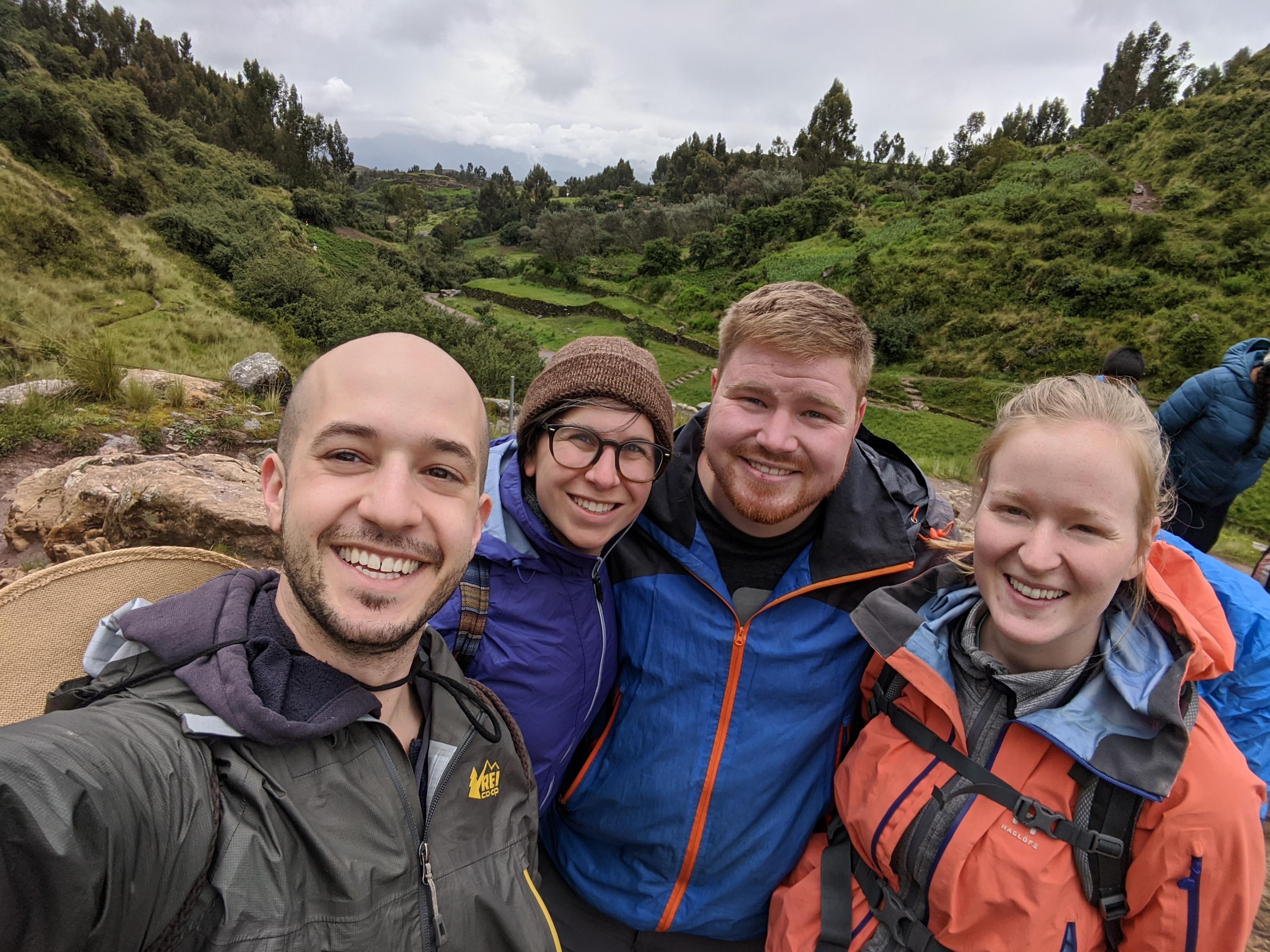
The origins of this historic site are debated, but it is generally believed to have been either a place for water ceremonies or a resting place or bath house for military. The main feature is a stone structure that includes channels through which water cascades.
I found this heritage site incredibly calming as it is nestled in two hills that were covered in tall, green grasses. It had a mystical feel about it.
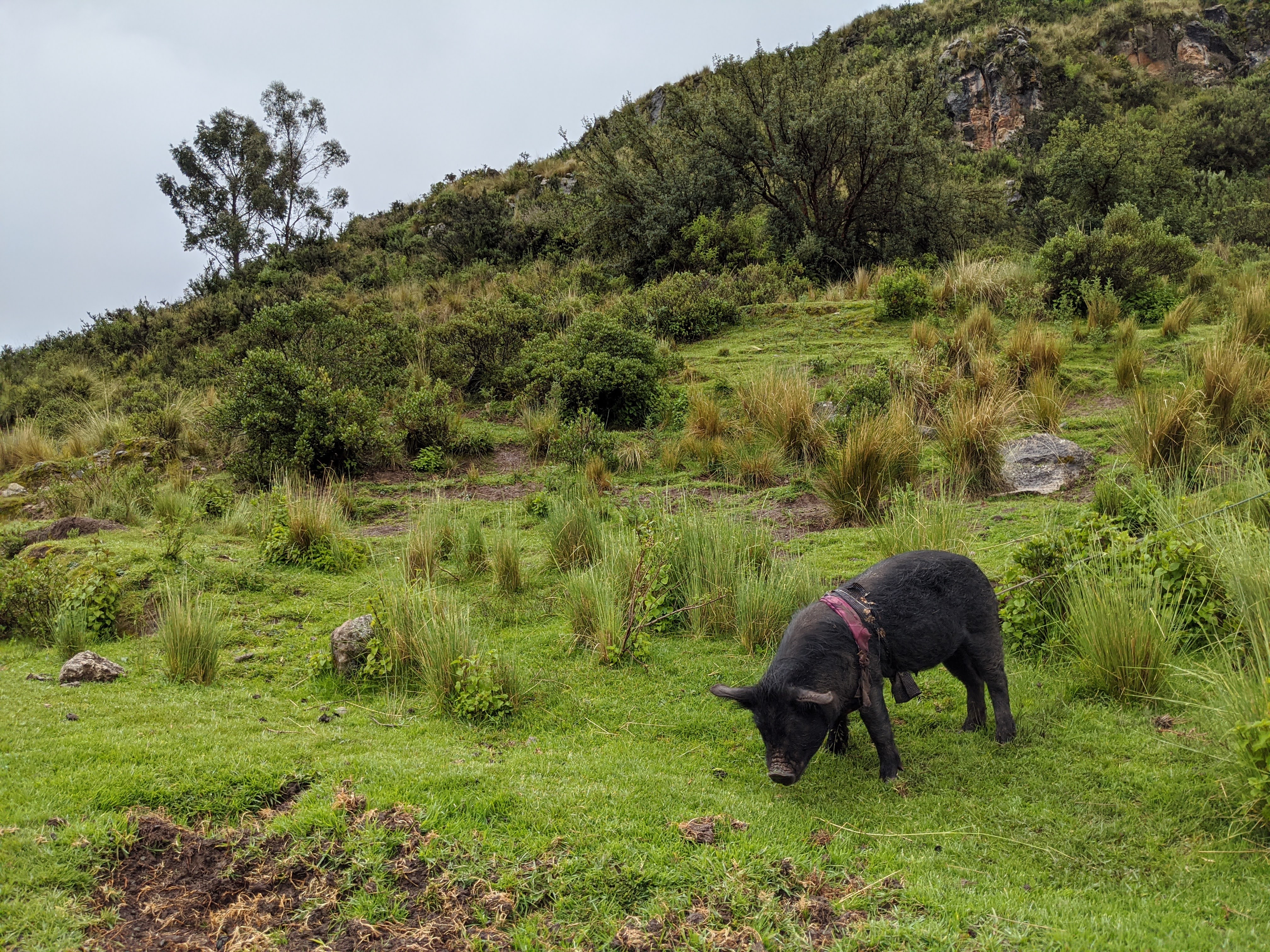
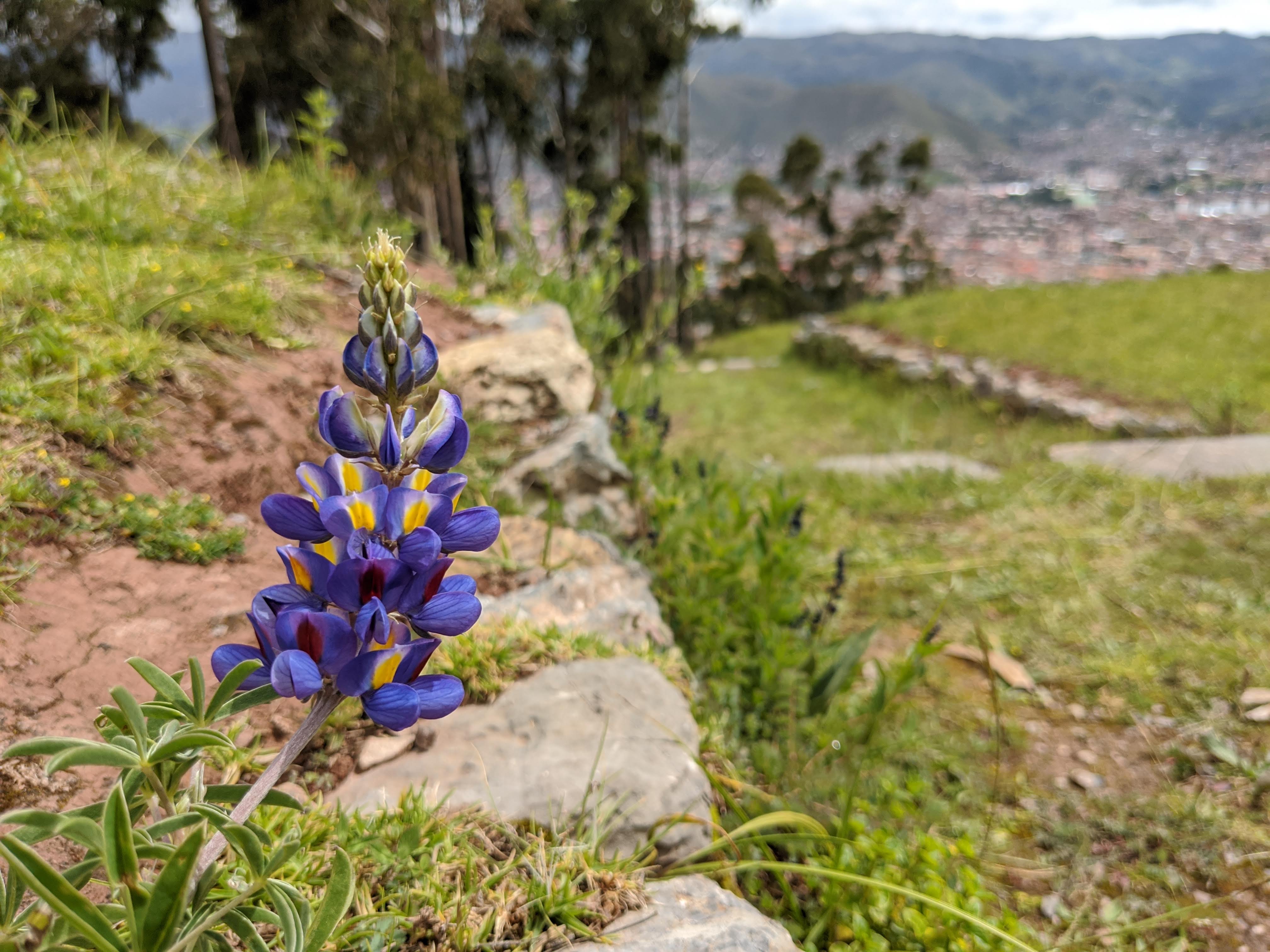
While there doesn’t initially seem to be that much to see, we followed a (muddy) walking path up onto the hill across from the water structure. Along the path we found pretty flowers and came across farm animals grazing, including a donkey and pig.
We followed the path up and behind the fountain structure and into a small local street. It was a nice peek into local life.
This way took a little meandering to find our way back onto the main road, but it wasn’t difficult overall. We came out just a short way from the entrance to Tambomachay. We were sure to be quiet and polite in the neighborhood but didn’t feel like we were intruding at all (and I am usually super aware if it feels like I shouldn’t be somewhere).
If that makes you uncomfortable, simply walk back out along the main entrance, which is an even gravel pathway.
Whichever way you leave, you will see your next stop down the road to the right. You can’t miss it.
Puka Pukara
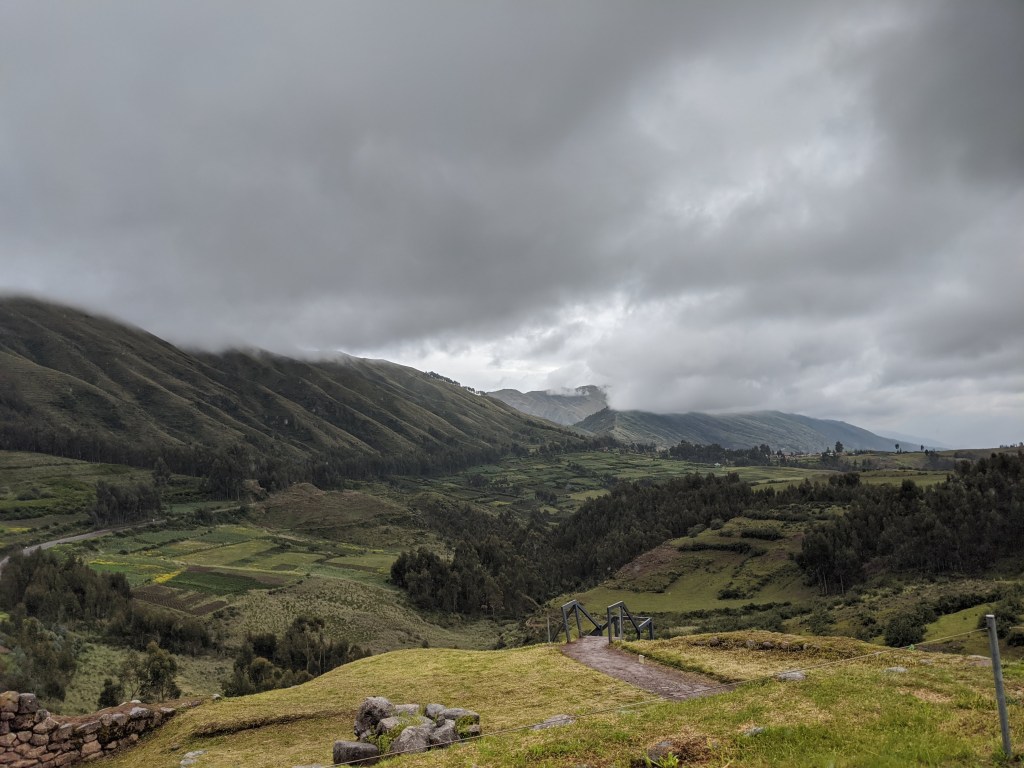
Puka Pukara, meaning “red fortress,” is an old army outpost allegedly named for the red tint it takes under certain light. This stop was the most underwhelming for us (we certainly didn’t see any red), but it only takes a few minutes to explore and it is included with the tourist ticket, so you might as well take a look.
Its main feature is a multistory fort built into the hillside. It overlooks beautiful farmlands and mountains, which were shrouded in dramatic cloud cover when we visited.
When you leave, head away from Tambomachay. You’ll have a while to walk now. Keep to the main road and you’ll hit your next stop after 45 minutes to an hour, depending on how quickly you walk.
Q’enqo
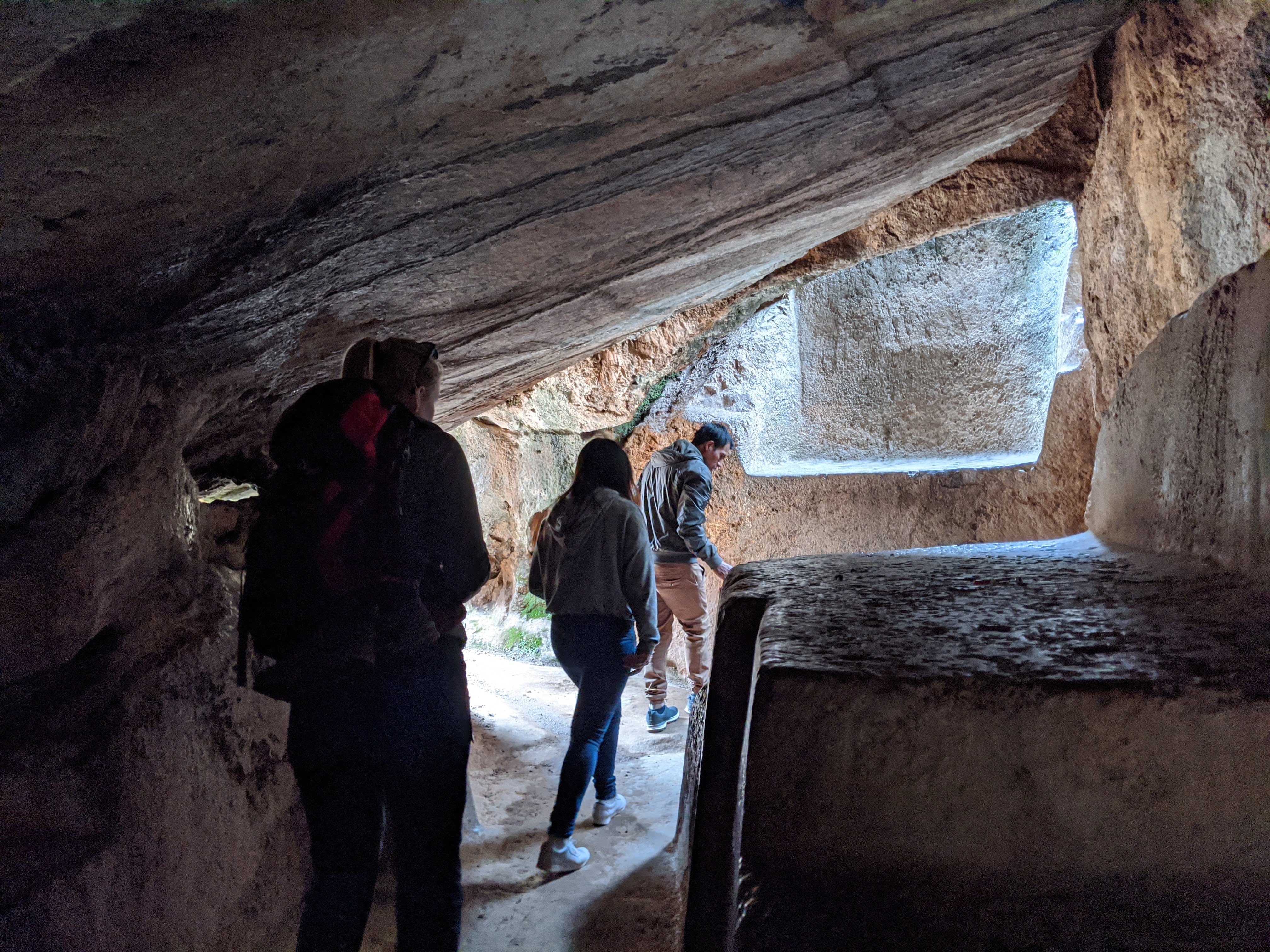
Our Uber driver triple checked that we were making a stop at Q’enqo, which he said was his favorite of the ruins. I can see why.
This maze-like structure means “zig zag” in Quechua, the ancient Incan language, and it had a distinctly different feel than the previous stops. Where Tambomachay was peaceful and Puka Pukara had the clean-cut atmosphere of an military outpost, the slants and twisting alleys of Q‘enqo were a touch ominous.
And for good reason: Q’enqo was used for ritual sacrifices.
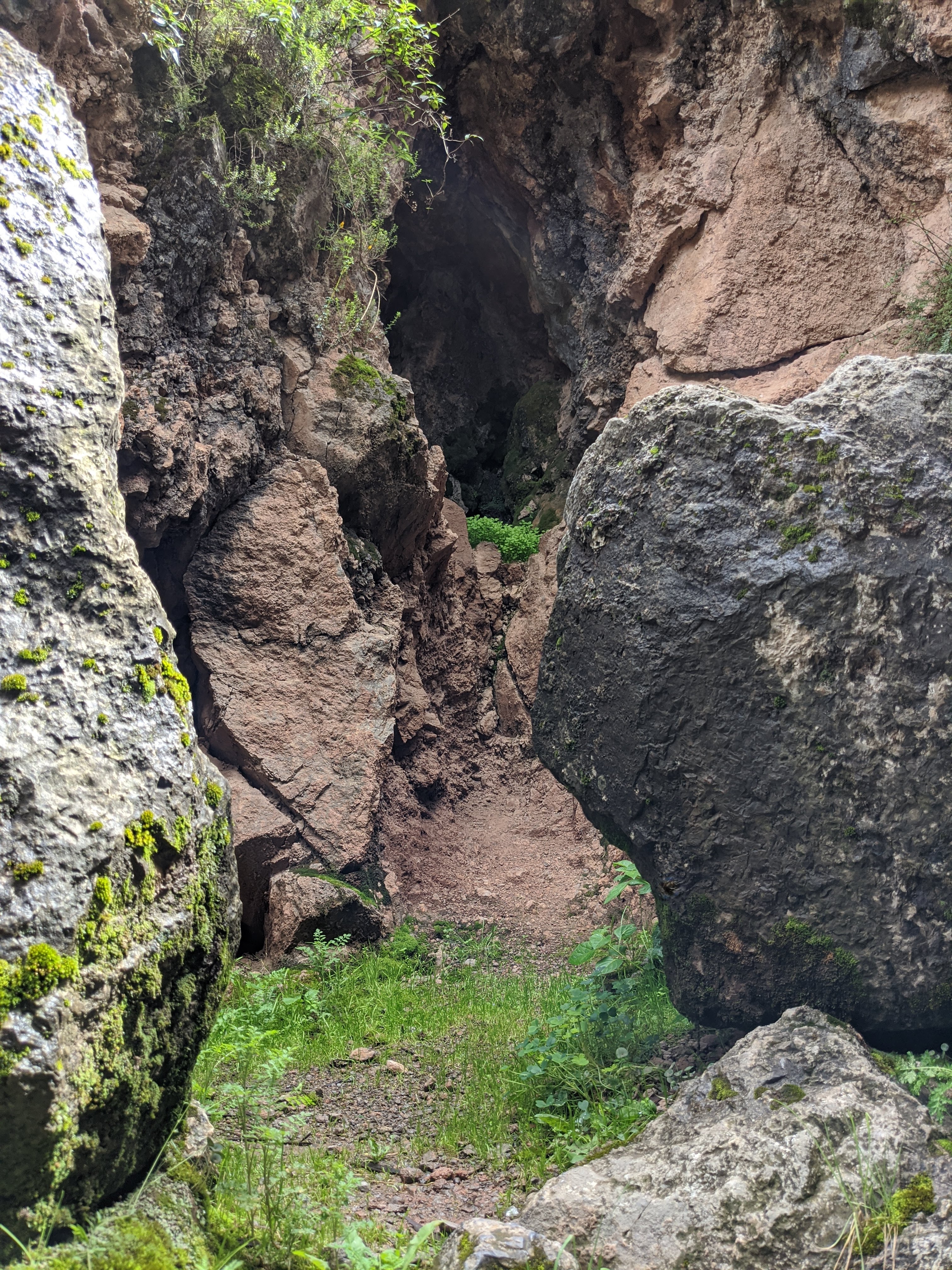
The slaughter room, a carved tunnel in the rock, contains a raised bed, channels through which blood ran, and other nooks and crannies that we left up to our imagination.
From Q’enqo, you’re getting closer to Sacsayhuaman. You may have even passed a few signs for the greater archaeological site by now. Keep heading down the main road and you’ll see a shop-lined dirt road diverge from the main one with a clear entrance to the main archaeological site.
Sacsayhuaman

Sitting above Cusco’s historic San Blas neighborhood, Sacsayhuaman may sound like a descriptor for women, but actually refers to the hawks that still soar there (“huaman” translates to “hawk” in Quechua).
This massive heritage site was a great fortress during the Spanish invasion, though the initial site may even pre-date the Incas. Also believed to be a ceremonial site, reenactments are held there every year, the biggest of which is the Sun Festival, held annually June 24 to celebrate the winter solstice.
Throughout the city of Cusco, visitors see the Incans’ incredible stonemasonry, but Sacsayhuaman holds the largest human-made stones I have ever seen. Taller than many people who walk by them, it’s a marvel to think about how they might have been carved and transported.
It was quite busy near the main entrance, but quieted down the farther back you get. Don’t be afraid to explore, there are some cool things to discover if you stray from the pack.
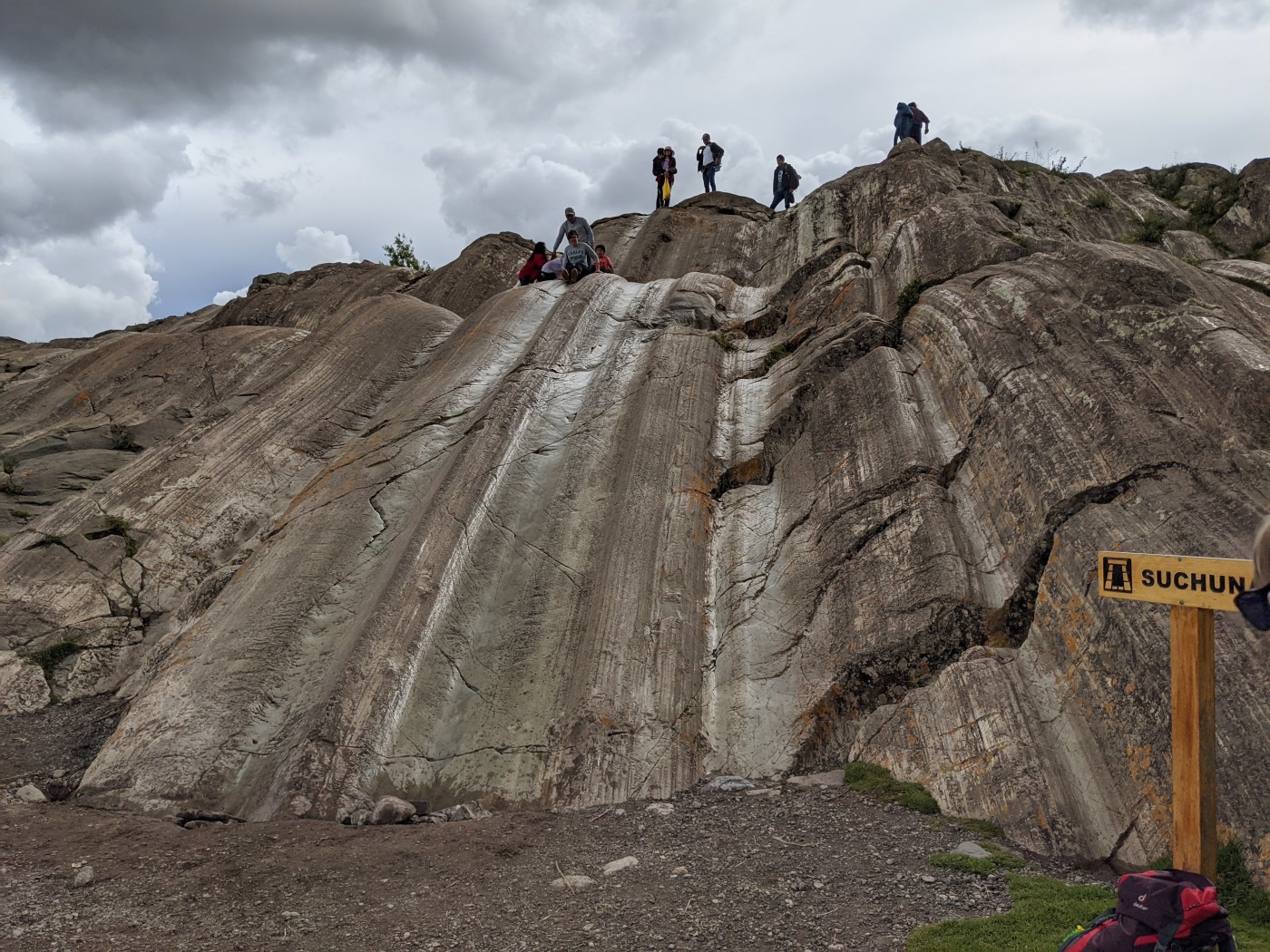
I suggest you check out the Rodadero Slides – natural, smooth slides etched into the soft limestone. We enjoyed sliding down these natural formations with children and adults from all over the world. At the time, it hadn’t even occurred to me that Incan children might have done the same!
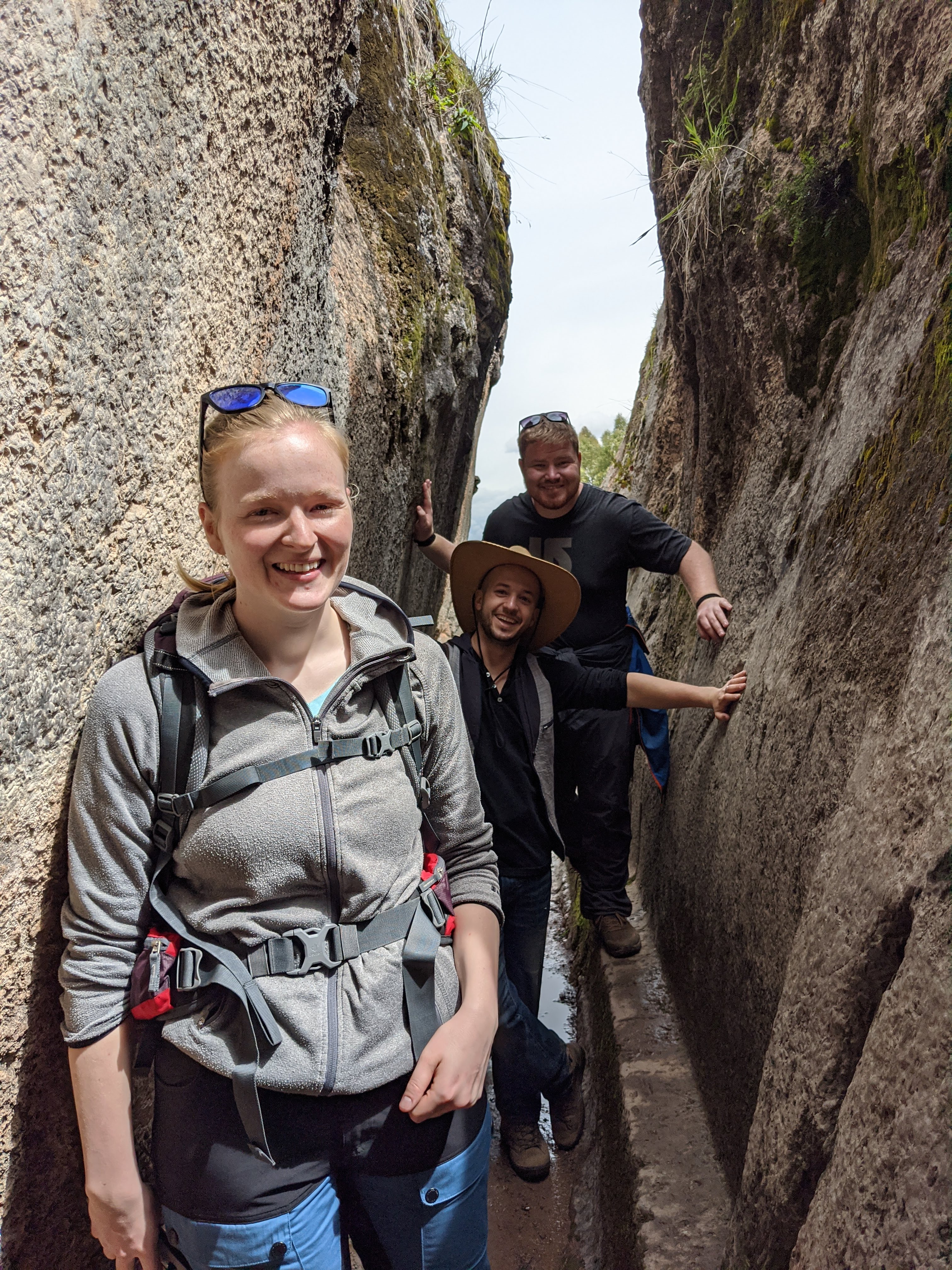
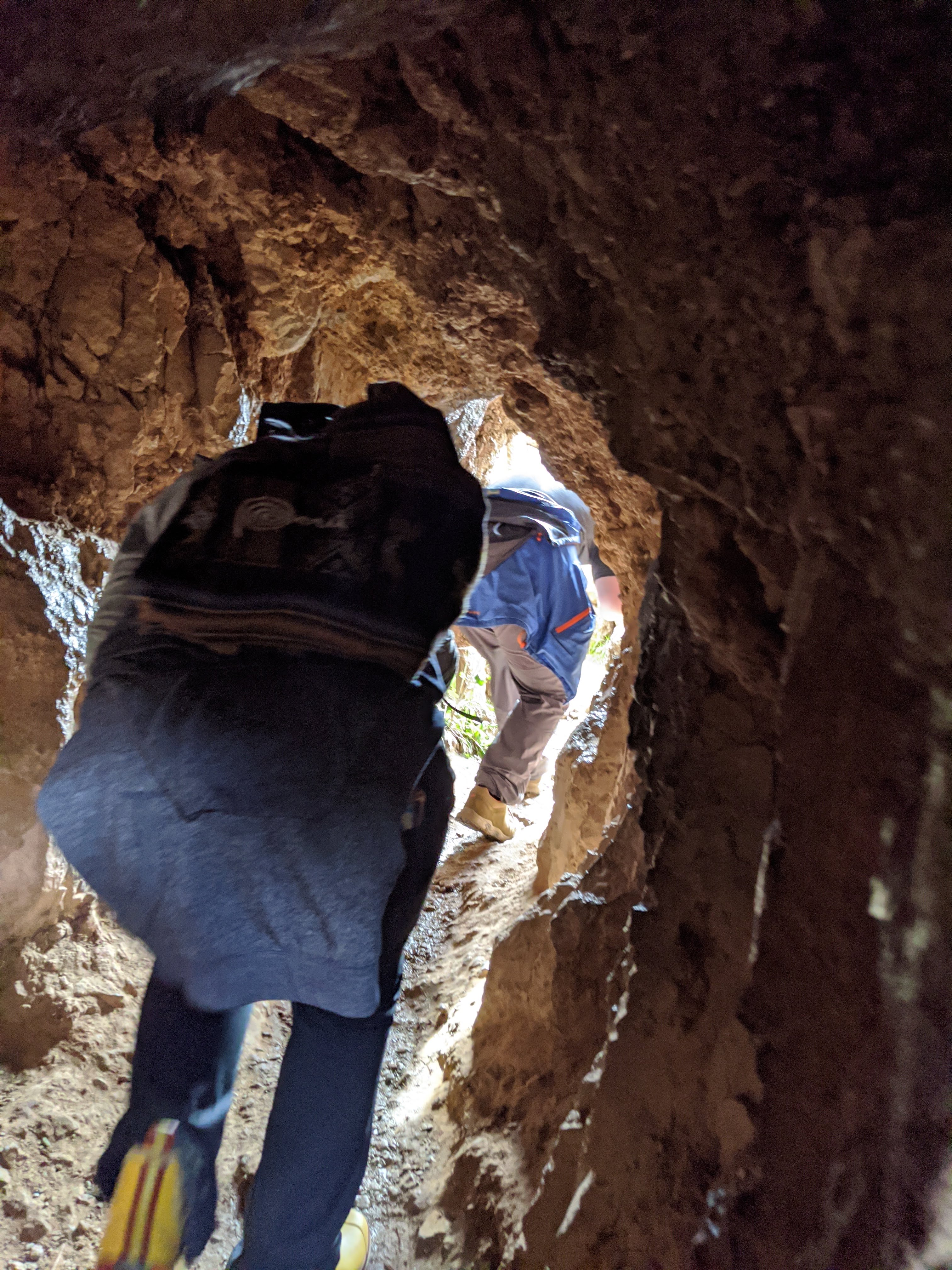
Our curiosity got the better of us, too, when we happened by a pitch-black tunnel built into the stone. Tall and skinny, we inched our way through, unsure if there would actually be another side to come out of. Just as Mona and I started to worry we would never see the other side, a peek of sunlight drifted in.
This tunnel is one of Sacsayhuaman’s two “chinchanas,” which means “places to get lost.” These underground tunnels were formed by groundwater in the soft rock. We discovered the easier-to-find-and-traverse short tunnel. The larger chinchana – which is bathed in legend – Is blocked off from visitors, which is fine by me. The short one was enough of an adventure.
Getting Back to Cusco
If you’re tired at this point, you’re close enough to the city where you should have better luck calling a taxi back. If you still have a little bit of energy, you can follow the road down toward Cusco. We cut into the San Blas neighborhood at our first opportunity and wandered downward toward the Plaza de Armas, exploring a couple off-the-beaten-path shops. It took us about a half hour, but there may have been a more direct route.
The Wrap-Up
When all was said and done, my partner and I visited seven ruins during our trip: Machu Picchu, two in Ollantaytambo, and these four in Cusco. Each one was distinctive in purpose, atmosphere, and experience.
When traveling to Peru, Incan influence is a huge part of the Andean culture. Visiting these ruins gave us a sense of wonder for the mysterious Incan culture that was so sure-footed high in the mountains. It also saddened me to think that so much of its history has been lost.
I hope you find this day hike in Cusco helpful. Let me know what your favorite historical site in Peru is in the comments!
Until next time, Mel
 The Scaredy-Cat's Guide to Travel
Leave a comment