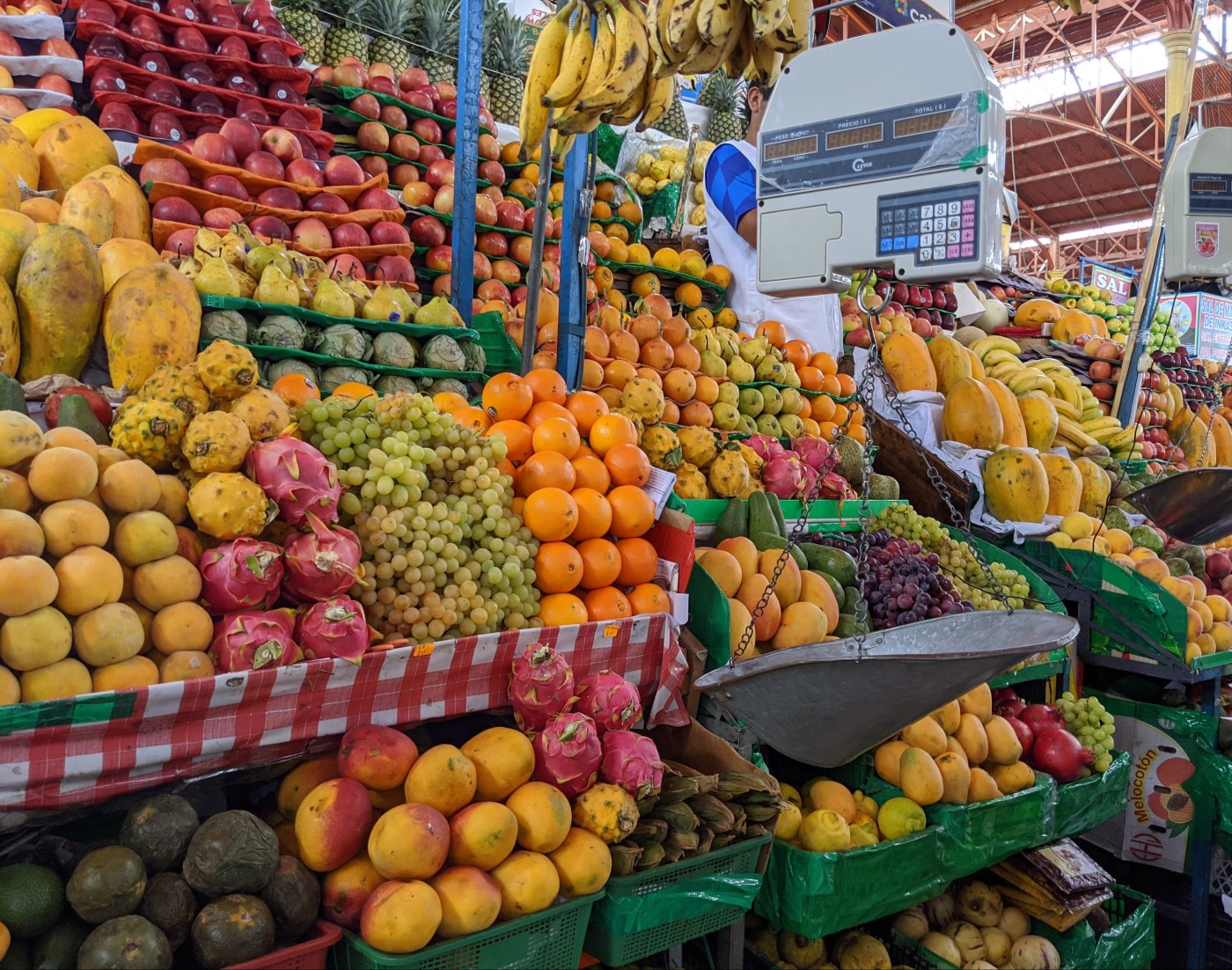
If you follow my social media accounts or have checked out the About Me page, you’ve probably caught on that I’m a little food-driven. I like to try new foods wherever I go and have a distinct fondness for regional cuisine that I can’t get anywhere else.
I recognize that what’s weird and unique to me isn’t weird or unique to other regions at all. I grew up in New Jersey, where pork roll rules the breakfast meat kingdom. It’s such a big deal that one of Jersey’s favorite pastimes is debating which of two names is the correct one. Outside of my region, though, no one knows what any of us are talking about.

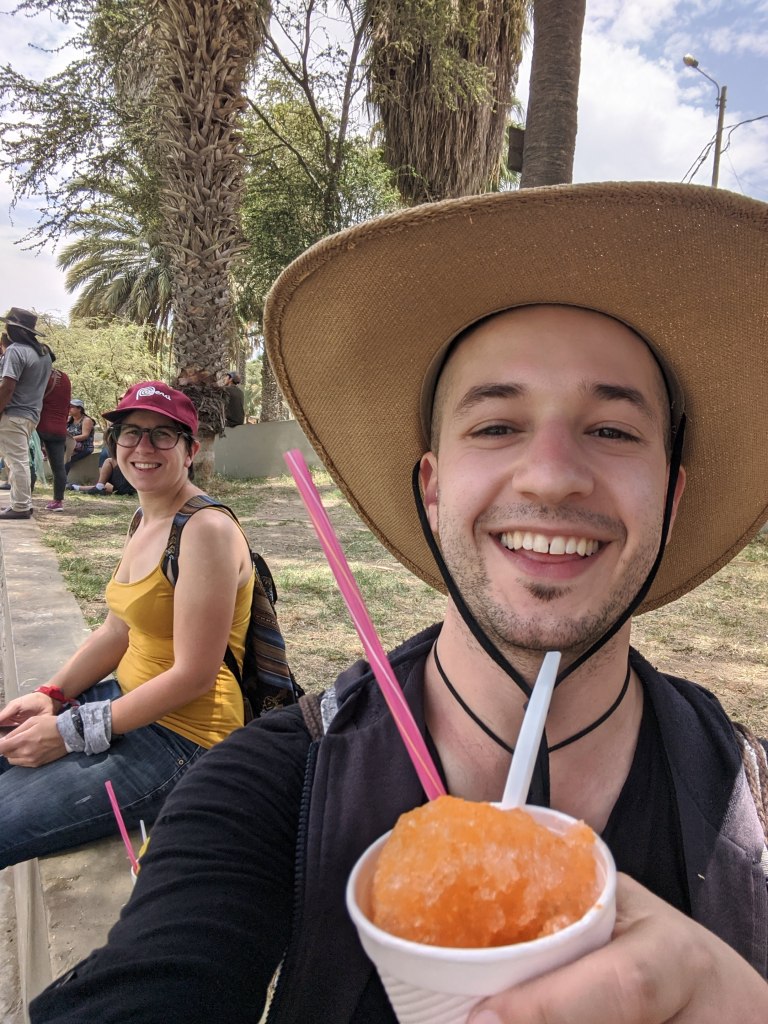
I’m a scaredy cat in a lot of ways, but food doesn’t tend to be one of them. Because of that, I’ve definitely had some questionable things over the years – including shaved ice in Huacachina which we realized halfway through was probably just made with tap water, one of those things you’re definitely supposed to avoid in Peru. It just looked so delicious on a hot desert day!
I only truly dislike three things: black licorice, bell peppers, and caraway seeds.
(Iceland had some of the best snacks I’ve had while traveling, but they really love black licorice, too. One of my friends fell in love with one snack that was simply salt-covered black licorice, and I’ll be honest, I’ve never looked at her the same way.)
Peru is a great place for adventurous eaters because its cuisine differs depending on the region. In Lima and beach regions, try ceviche. In Arequipa, look for picante cuisine. In the Andes, potatoes and cuy reign supreme.
A note: a lot of Peruvian restaurants have American tourist menus and we tried to avoid them as much as possible.
I will upload individual city guides in the coming weeks with shoutouts to specific restaurants, but until then I invite you to look through some Peruvian specialties below and get your palate ready.
Your Incomplete Guide to Peruvian Food
Please note, these are in no order whatsoever.
Ceviche
You may have seen this dish in the U.S., but ceviche (or seviche or cebiche) was created in Lima. In this dish, ultra-fresh fish is “cooked” with citrus juice and other ingredients to create a cold seafood course. The result is a tangy, refreshing dish that isn’t fishy at all. Ceviche mixto is a popular version that includes shellfish and calamari with the traditional fish. Vegetarians will find Ceviche de Champiñones (mushroom ceviche) more to their taste. We also had a river fish ceviche in Cusco and “Tiger’s milk,” the liquid marinade for the dish.
Cuy
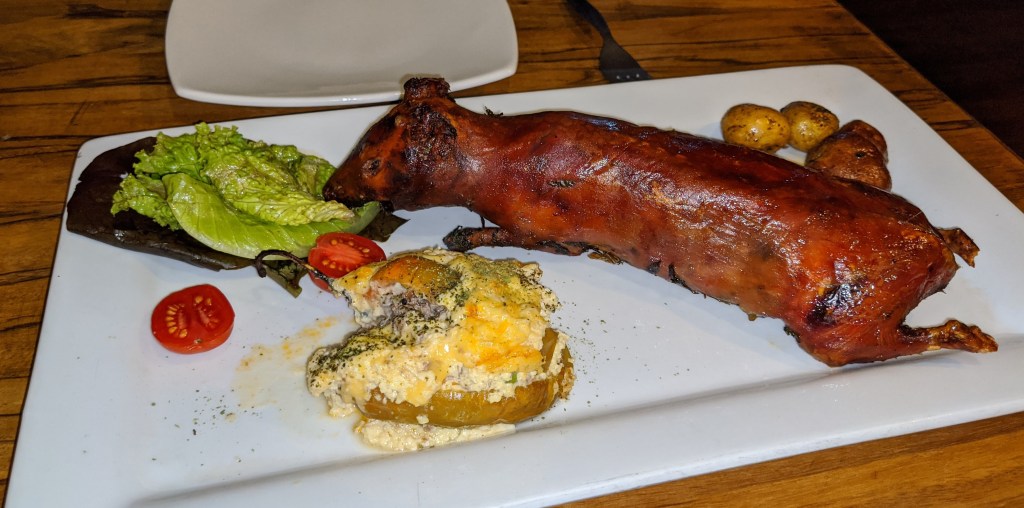
A long time ago I worked with a Peruvian woman who found it strange that her son wanted a guinea pig for a pet. For her, they were food. Well, Carmen, I agree with both of you. They are adorable pets and now I know they make for a pretty yummy dinner, too. It was an experience eating a full roasted cuy with our hands. These small mammals don’t have a ton of meat, but it’s delicate in taste. We recommend what the chef recommended to us: start with the ears. You can find cuy on fancier menus in the tourist center or, if you’re willing to walk about 30 minutes, Sol Moqueguano comes highly recommended from a friend who visited just after us. It only serves cuy (two ways), so you know they can do it right.
Potatoes
If you’ve been following me on social media, then you already know this fun fact: Peru is home to roughly 3,500 potato varieties. Many are exported, but Peru is still a potato-lovers dream. Lots of potatoes also means that vegetarians can find meatless offerings in many restaurants. It’s hard to tell, but I would estimate we ate at least 15 types of tubers while in Peru. We ate seven kinds at Hatunpa, a potato-focused restaurant in Arequipa, and had forms of potatoes with many other meals.
Quail eggs
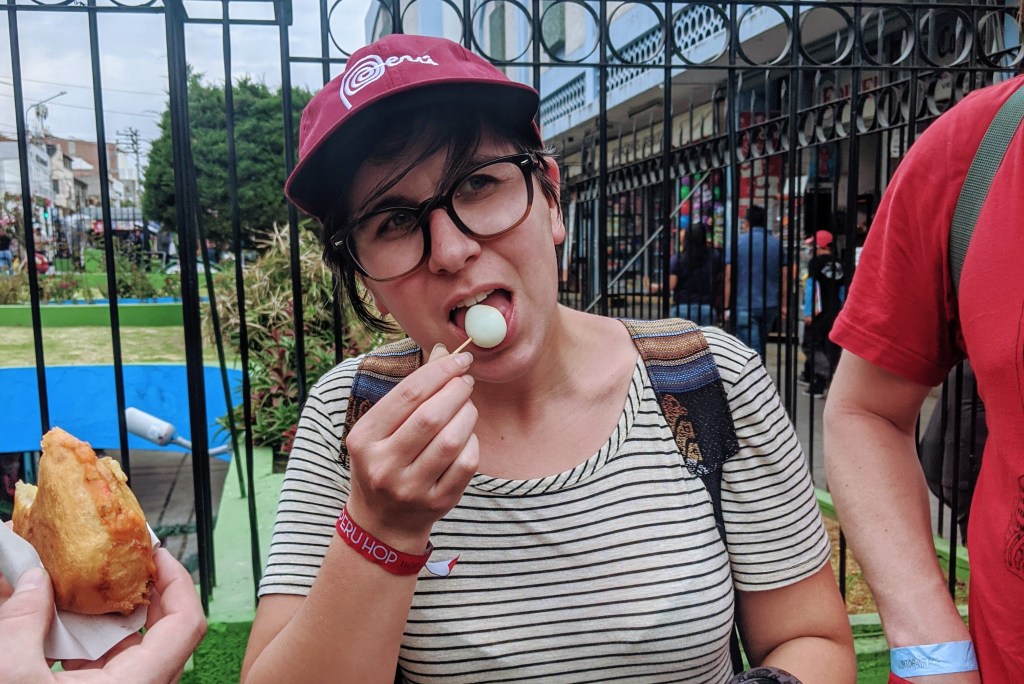
I spotted this inexpensive street food in Lima first, but didn’t try them until Arequipa. Hard-cooked, they’re served warm with a sprinkling of salt. We found them outside Mercado San Camilo, a large market that is also the source of the fruit picture up top.
Chaufa
Influenced by the food of Chinese and Asian slaves and laborers in Peruvian history, Arroz Chaufa is a fried rice dish that blend Asian and Peruvian flavor profiles. I never had more than a taste myself (it was good), but it’s on many menus and was a good choice for less adventurous eaters, like some of the kids we ended up sharing tables with.
Fruit
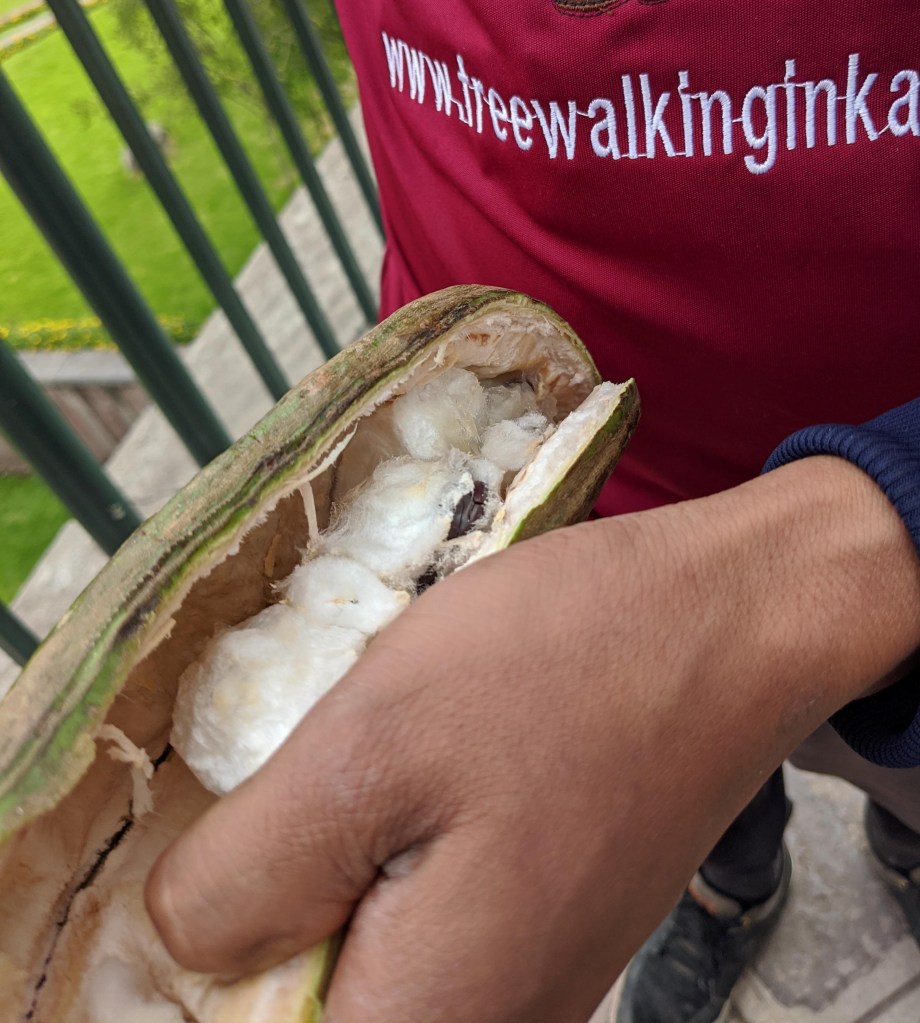
From fresh favorites like mango, papaya, and pineapple to brand new discoveries like lucuma, a savory fruit that was delicious in popsicles, and pacay, also known as the “ice cream bean,” a jungle fruit with stringy, airy white pulp that tastes similar to vanilla, Peru has an amazing variety of fruit. Fruit was usually included in hostel breakfasts, but where this really shined was in the sweet, tangy, rich, and most importantly, undiluted fruit juices offered wherever we went.
Picarones
Donuts! Well, donut-like desserts made from sweet potato and squash, deep-fried and drenched in rich syrup. While I am a cat person, the main reason I wanted to go to John F. Kennedy Park in Lima, home to a free-roaming cat sanctuary, was because I’d heard you could get picarones there. Did I mention that I’m food-driven? They were all that I’d hoped. As a bonus, the park has several other food stalls to choose fresh snacks from, and I do love food stalls.
Choclo
Choclo is the name for Andean corn, which has luscious oversized kernels. Toasted choclo kernels (known as cancha in Peru) are often found on dinner tables and are a popular snack food. Crispy and salty on the outside and soft and flavorful inside, they’re similar to the U.S.’s corn nuts but better. Choclo con queso is something I’d been looking out for during our travels and finally found in tiny Ollantaytambo. Fresh cooked corn with a slab of salty, savory Andean cheese, this street food sounded easier to eat in theory than it actually was, but it was delicious nonetheless.
Alpaca
A mild red meat that’s super tender, we only saw alpaca offered on a couple menus during our travels. Leo had lomo saltado – a traditional Peruvian stir-fry with meat, vegetables, and potatoes – with alpaca instead of beef at one Arequipa restaurant and then we shared a melt-in-your-mouth alpaca burger in Puno before heading out to Lake Titicaca for the night. I don’t eat all that much meat, red or otherwise, but I thoroughly enjoyed the alpaca in both forms.
Chile Rellenos
The Arequipa region is known for picante cooking, which is a slightly spicier regional cuisine than in other areas of Peru. We made our way off the beaten path to eat at a locals-recommended restaurant to enjoy regional dishes like Chile Rellenos. These chile peppers were stuffed with an interesting, delicious mix of meat, cheese, raisins and olives. You can also find papa rellenos, the potato version.
Aji de Gallina
I ate this traditional dish featuring chicken and potato in a creamy chili sauce twice while in Peru. During our stop in Nazca with Peru Hop, we ordered off a set tourist menu that disappointingly didn’t include the Spanish names of dishes and included some questionable translations, which suggested the dish was spicy and cheesy. It was neither. Peppers in Peru are generally used to add depth of flavor, not spice (they have salsas and other condiments for that). I then ordered aji de gallina a second time at Café Macchiato in Cusco, although with the accurate description and Spanish name I didn’t realize it at first. I enjoyed it much better the second time around.
Anticuchos
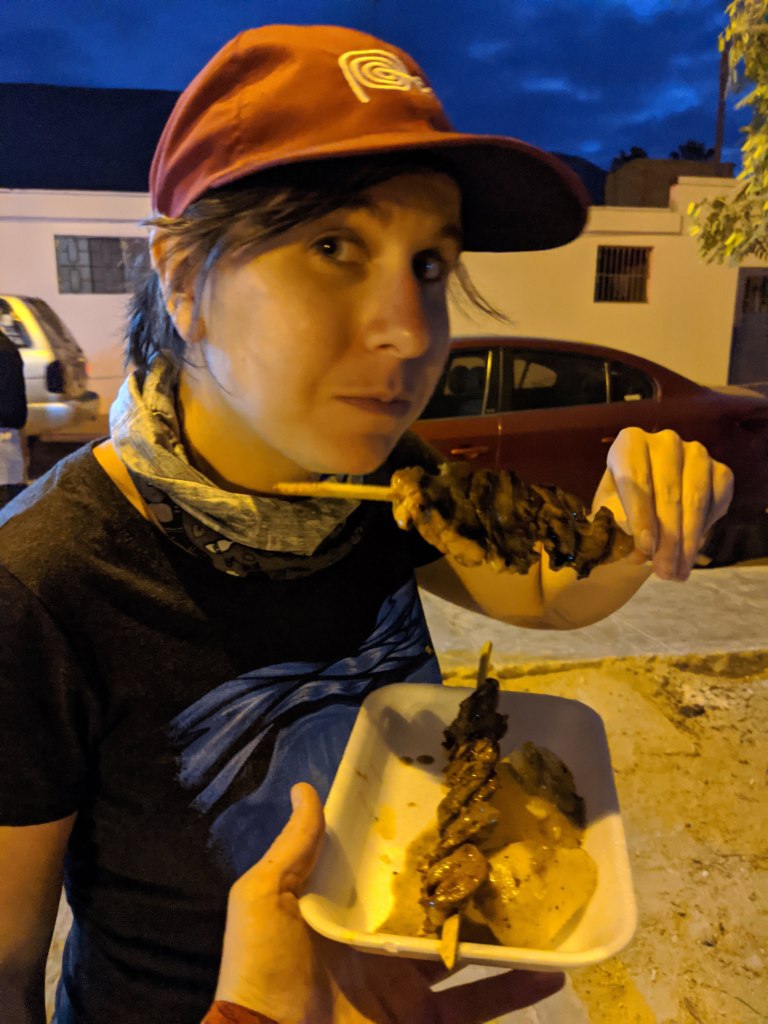
Grilled beef hearts, we ate anticuchos twice while in Peru – once in Lima and once from a street vendor in Huacachina. They can be chewy and probably won’t be to everyone’s taste, but I appreciated being able to eat a part of the animal that might just get wasted in Western society. The restaurant dish was flavored and cooked expertly to be neither tough nor chewy, while Leo preferred the right-from-the-grill street vendor version pictured above.
Drinks
Pisco
Distilled from fermented grapes, pisco is Peru’s national drink. There’s some debate about whether the alcohol originated in Peru or Chile, but regardless, it’s an important part of Peruvian drinking culture. We visited a pisco vineyard and were offered samples of pisco on several tours. The most often-hyped drink was pisco sour, made with lime, egg white, and sweetener. We had varieties that were infused with mango and mint, too. My favorite pisco drink, though, was a fruity chilcano made with ginger ale and papaya juice that I got in a hotel bar in Cusco. I unfortunately didn’t write down the name.
Diana
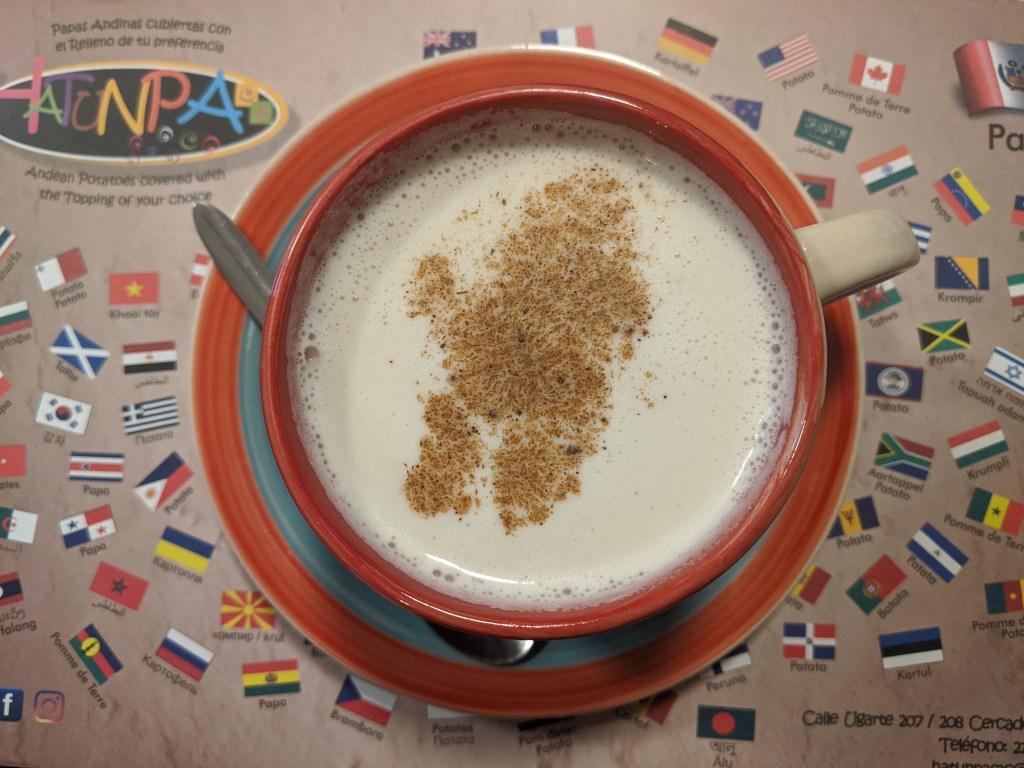
A soul-warming drink found in Arequipa, Diana is a hot, milk-based drink with a nutty almond and coconut taste accented by cinnamon and spices that our server said is traditionally served during festivals. I drank it without alcohol at Hatunpa, but much like coffee or hot cocoa (both of which are also exquisite in Peru), this delectable drink can be spiked.
Chicha
This bright purple drink made from purple corn comes in alcoholic (chicha de jora) and non-alcoholic (chicha morada) varieties. We first happened upon it in Lima when it quenched our thirst during a walking tour. Chicha varies from mildly sweet to super sweet. It was generally well-liked among our friends and I found the less sweet versions to be incredibly refreshing.
Inca Kola
Invented by a British ex-pat in Peru in 1935, Inca Kola has a love it or hate it following. Now owned by Coca-Cola, this bright yellow soda is made with lemon verbena and tastes like bubble gum or cotton candy. For me, it tasted exactly like the bubble gum flavored tooth cleanser my dentist used to use during check-ups as a kid. We bought one small bottle of this during our travels and that was enough, but it’s a staple and you should definitely give it a go.
Coca Tea
When altitude sickness hits, coca tea helps acclimate the body. Coca, from which cocaine can be derived in highly synthesized forms, has been used in the high-altitude Andean regions of Peru and Bolivia for centuries to help bodies cope with lower oxygen levels. Steeped in hot water, it acts generally like a caffeinated tea or coffee, with some added benefits. It has an earthy flavor and is available – usually free – in most hostels and accommodations in the Andean region. You can also purchases leaves raw in markets or find coca-infused candies and chocolates.
The Wrap-Up
Some of you may have noticed that there is one big omission here, and that’s rotisserie chicken. We didn’t know we should until after we came back. It’s been added to our growing list of “Things we’re going to do next time we go to Peru.”
Don’t forget that even when exploring your own country, every area has their specialty. In Rhode Island, I always try to grab a bowl of chowder. In New York, a slice of pizza. What’s the best food you’ve eaten while traveling?
Until next time, Mel
 The Scaredy-Cat's Guide to Travel