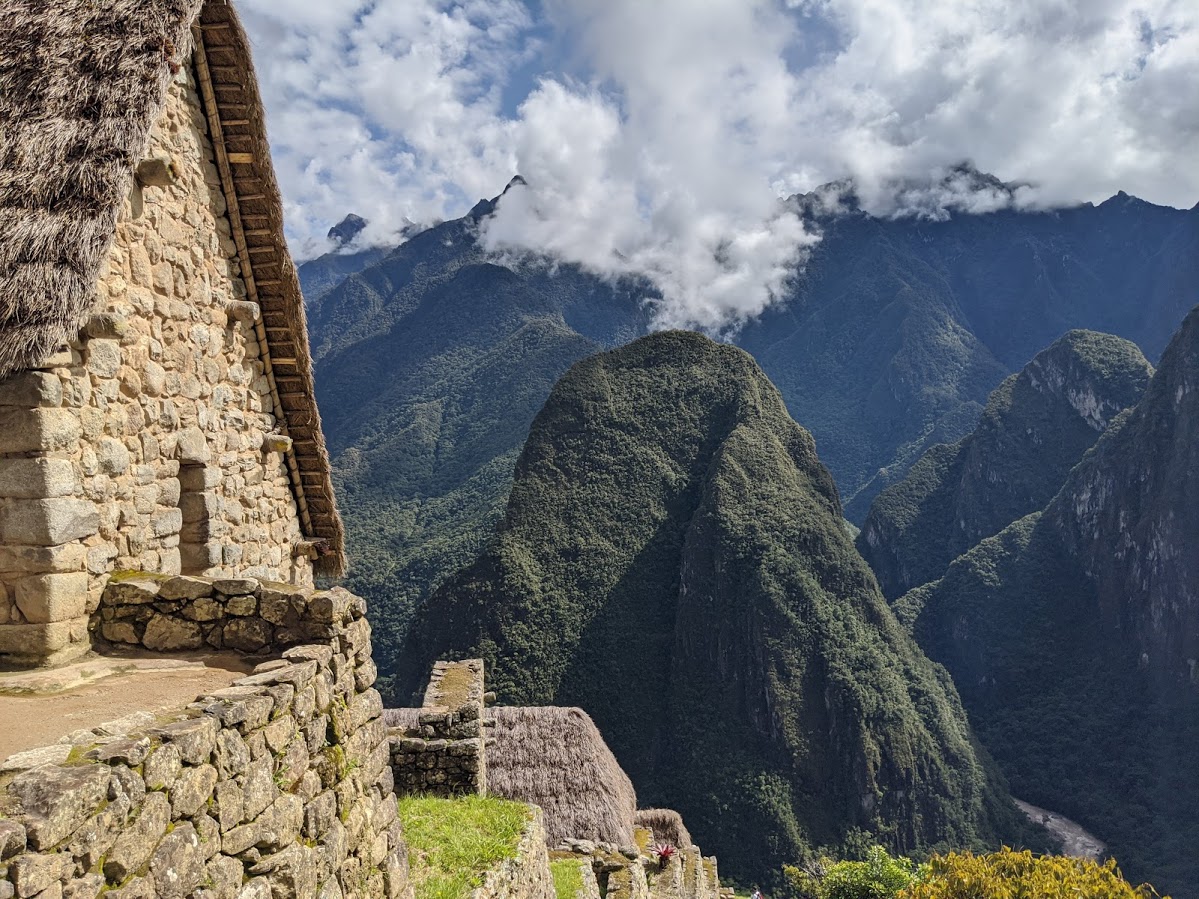
Destination: Southern Peru
Cities visited: Lima, Paracas, Huacachina, Arequipa, Puno (Lake Titicaca), Ollantaytambo and Cusco
If you ask people why they want to visit Peru, chances are they’ll mention Machu Picchu. It is a breathtaking sight (and site), which I’m so happy to talk about today! I ended up loving Machu Picchu more than I ever thought I would.
I had been worried about overcrowding and was dreading the sinking feeling I get when I see people disrespecting beautiful things.
This dread is a deep-seated feeling that I’ve gotten repeatedly since I first witnessed tourists surround a terrified Bighorn Sheep at the Grand Canyon. Inching closer and pointing cameras at it until its back was up against the safety rail, it ended up leaping over the edge.
Now I’m old enough to know that Bighorn Sheep are built to traverse cliff edges (and avoiding “predators” there), but at that time it was quite traumatizing.
My worries weren’t helped when the news broke just before we visited that tourists (six of them!) defecated in a sacred temple. Aside from one woman who crossed a barrier on a steep ledge to try to get a better selfie, people seemed to be on good behavior while we were there.
As far as crowds during the off-season, while it could get a little claustrophobic in some of the bottlenecks around the main archaeological site, we also found some ways to find peaceful solitude while remaining within bounds.
Anyway, there’s a lot to cover here, including tickets, getting there, and what to do once you’re there, so I’ll hop right in.
Overview: Machu Picchu in the Off-Season
The cream of the crop, the crème de la crème: This former citadel is one of the modern Wonders of the World, famous the world over for its breathtaking views.
Machu Picchu sits high in the Andes, nearly – and sometimes literally – touching the clouds.
During peak season it infrequently rains, making for more reliable weather. In the off-season, the weather – and cloud cover – is variable. It’s just the luck of the draw.
We visited on a morning that was beautiful, sunny, and dramatic. By the time we had reached the base of the mountain again, it was raining and the clouds had covered the mountains. Travel companions visiting both the day before and after reported less than optimal weather – including views marred by clouds and fog – but still loved every minute of their visits.
One bonus of Peru’s summer season is that rain and warmer weather means lusher foliage. The trees and grass were rich green and the flowers in bloom in all their colorful glory. We even saw Birds of Paradise, which I had only ever seen in the botanical gardens before.
To optimize your chances of having good weather during the wet season in Peru, book an early entry time. To cut down on crowds and the wear and tear of the sacred site, the Peruvian government recently updated the ticket system. Now, general tickets are sold by hour and are good for four hours upon entry.
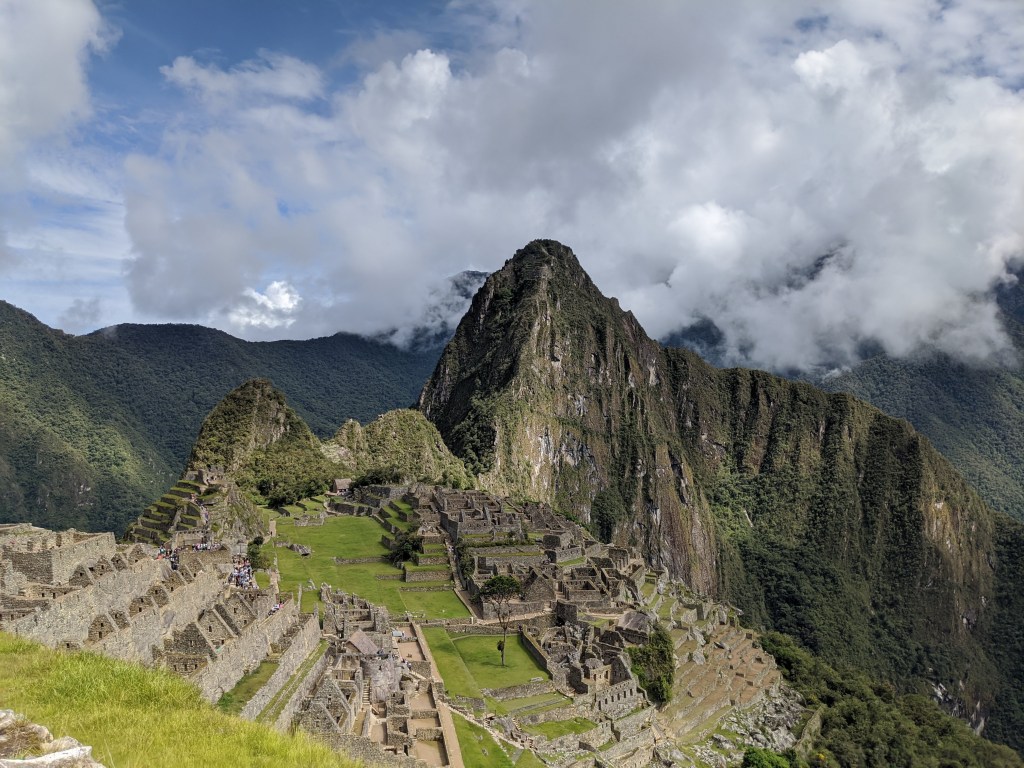
Clouds (and rain) tended to roll in during the afternoon, so if you get in early, you have a better chance of good weather.
How to Get There
There are a few ways to get to Machu Picchu. The most popular ways are by train from Cusco or via one of the hiking trails. Keep in mind that different ways of getting to Machu Picchu will require different amounts of prep time.
For example, to book a trek on the popular Inca Trail, you may need to book six months in advance. Train tickets will sell faster than the Machu Picchu tickets themselves and you should plan your train as soon as possible to avoid them being sold out. Machu Picchu entry tickets, on the other hand, were only available about a month in advance when we traveled.
We threw together our trip in about three months, which limited our options a little, but not as much as we thought it would. Again, there are benefits to visiting Peru during off-season.
By Train
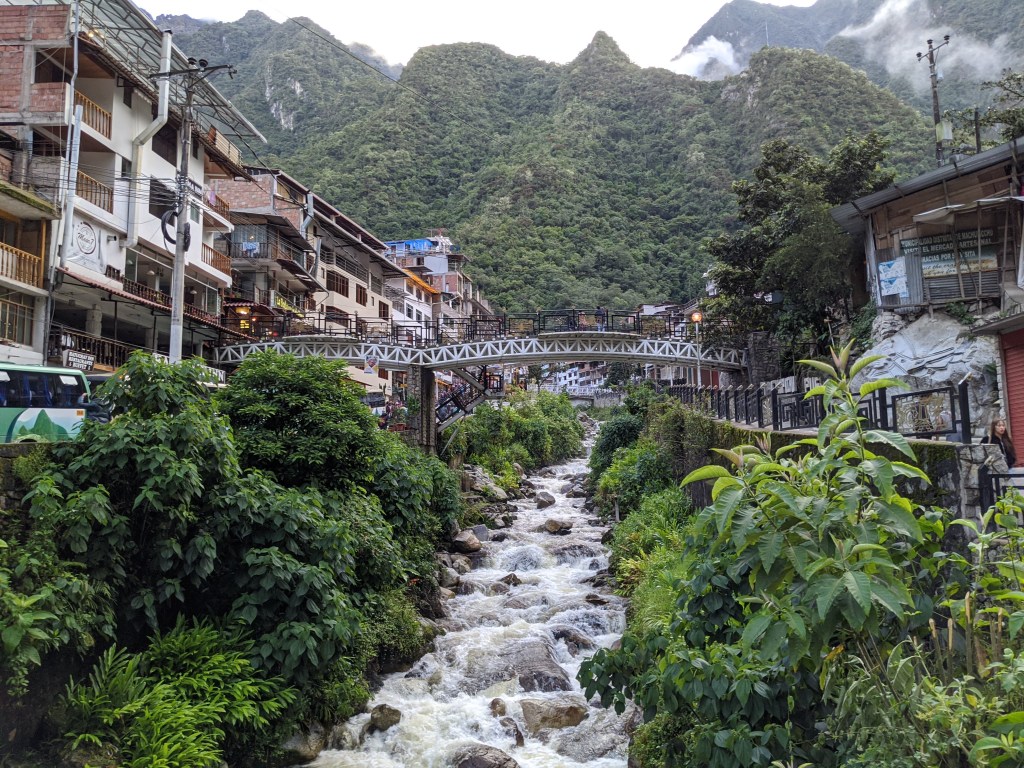
Most of the year, there are options to take trains directly from Cusco to Aguas Calientes, the village at the base of the mountain at Machu Picchu.
Aguas Calientes gives me the impression of a Yukon boomtown during the gold rush. The train bisects the town with identical restaurants, massage parlors and gift shops crammed in to accommodate the tourists. It’s fascinating to see (and pretty chaotic even during the off season).
Due to potential washout in the rainy season, both PeruRail and Inca Rail, the two tourist train companies, offer bimodal service January through April, which splits the trip between bus and train.
We took PeruRail from Machu Picchu to Cusco and were very pleased with the service both on the train and in their Cusco office. I was also pleasantly surprised at how smooth the transition between train and bus went. I felt very safe in the bus, which took the longer, safer route back to Cusco.
Both companies seem to be pretty similar in quality, but we chose PeruRail because their prices and times were slightly more in line with our needs.
Regardless, be prepared for the train tickets to be more than 100USD roundtrip per person. In all, your trip to Machu Picchu is going to be one of your biggest expenditures during your trip to Peru.
Because there’s no way to drive directly to Aguas Calientes, if you don’t want to take the train, then your other option is to get to Machu Picchu by foot.
By Foot
Many people choose to trek to Machu Picchu via the famous Inca Trail. The “easiest” walking trail to Machu Picchu, the Inca Trail is still considered difficult, especially for those who haven’t adequately acclimated to the altitude.
Let me tell you, you want to take the adjustment in altitude seriously. Don’t fly in and expect to hike out the next day.
My ankles and feet ballooned in Arequipa, the gateway city to the Andes, which made walking for lengths of time painful. Arriving in Cusco’s San Blas neighborhood a few days later, walking up steps led to shortness of breath and a pounding of the heart I’ve never experienced before. It was slow and steady for a couple of days. Altitude makes you dehydrate faster, too, and staying ahead of thirst was a nearly impossible feat.
And even then, we lucked out. I attribute this partially because of our slow ascent, plus a combination of altitude sickness pills, coca tea and leaves, and a dash of Florida water (an alcohol-based perfume that you smell for a jolt of sinus-cleansing effect).
Other friends experienced days-long nausea, headaches and fatigue in Cusco and Puno, leading to lost days in bed.
Even with minimal effects, you’ll want a couple days to acclimate to ensure safety for you, your travel companions, and your local guides.
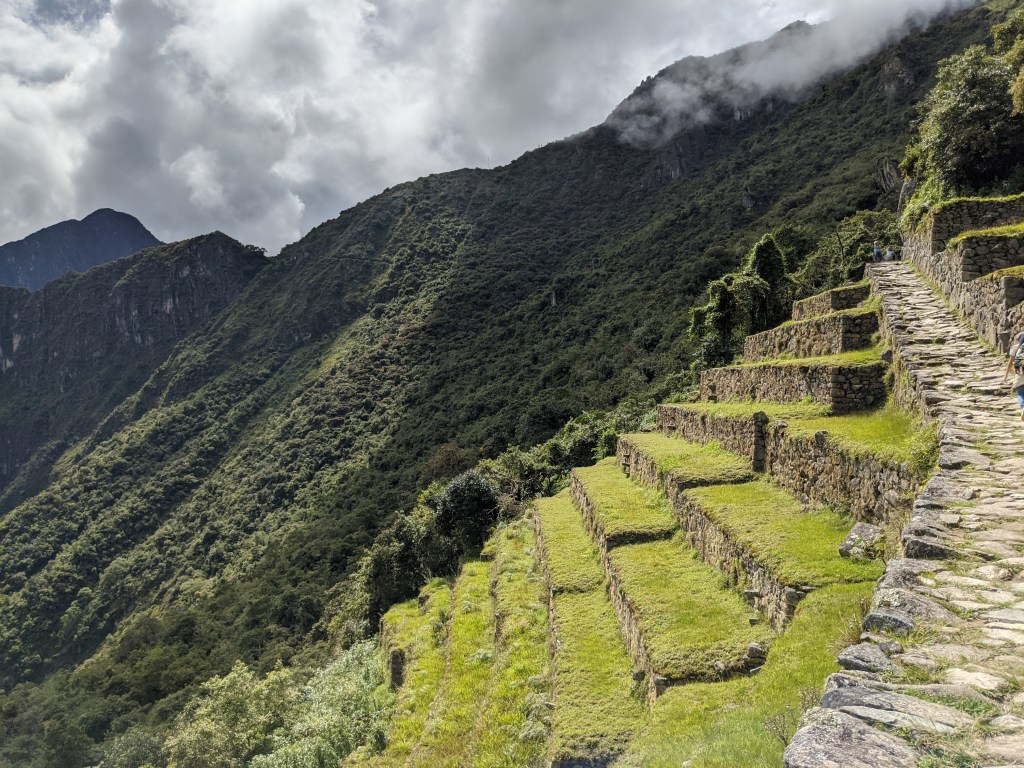
That being said, trekking into Machu Picchu does have a lot of benefits. Its landscapes are breathtaking (I’ve heard) and the sense of accomplishment at the end well worth the challenge.
We didn’t go this route for two main reasons:
- We booked our vacation too late
- I’m terrified of heights and psyched myself out even though I read this very helpful blog post that laid out the route and addressed my exact fears
I know my partner was pretty bummed about not trekking in and I’d love to visit again so that he can do it. I’ll just meet him at the top.
Inca Trail treks range in quality, activity and price, so hunt around. I had a friend book a 4-day Inca Trail trek for $150 only to find out that other people in her group had paid hundreds more because they’d booked through another agency and had slightly better accommodations the first and last night.
Treks range from 1-4 days, but some companies also offer adventure packs that include mountain biking and other activities for a longer experience.
If the traditional Inca Trail sounds too touristy or easy, then there are some other options, too. These include the more challenging Salkantay Trek or the Inca Quarry Trail.
What to Do Once You’re There
Aguas Calientes to Machu Picchu
So you’ve just gotten off the train. Now what?
There’s about 1,200 feet in elevation from Aguas Calientes to Machu Picchu, a distance that doesn’t quite compute until you’re headed upwards. I think of signs on the highway that say “left lane ends 1,000 feet” and then the lane is gone before you know it.
It’s something else entirely when that distance is vertical – and you’re not traveling 65 mph.
To get to Machu Picchu from Aguas Calientes, you have two options.
The most popular option is to take a shuttle bus up the winding switchbacks. The shuttle rides were 24USD round trip at the time of this publication and they last approximately 35 minutes each way. This is the more convenient route.
The other option is to walk up and back for free via a route that blends a trail and stairs.
As I said earlier, my partner was pretty bummed about not trekking in, so when I mentioned that there’s a trail up to Machu Picchu, he got really excited. And then I immediately started psyching myself out.
I couldn’t find many pictures of the trail and I worried that it would be too scary. I also read several reviews saying that walking up is exhausting, which kept travelers from fully being able to enjoy their time up top. (There were some complaints about bugs, too, which I would apply to the whole Machu Picchu experience – bring your bug spray!)
But while I was nervous, I also hadn’t come to Peru just to take the easy way the whole time.
We came to an agreement. We would bus up, peek at the trailhead and see what it looked like, and then decide about the way down.
After waiting in a long line for our shuttle tickets (if you stay in Aguas Calientes the night before, you may want to get your tickets in advance), we double-checked that we could buy return tickets up top if we wanted (we could) and hopped on our shuttle.
It was terrifying.
Maybe I was still just on edge from our Colectivo to Ollantaytambo, but the narrow roads ending in switchbacks – where we often had to share space with shuttles coming in the opposite direction – were a little too much for my anxiety to handle. I discovered a cute little beetle who had stowawayed on my day pack and ended up making a pet out of him to distract myself from the steadily higher view from the window.
No one had warned me about this, even though my cousin (who swears she’s scared of heights) had told me that Machu Picchu wasn’t scary. I’ve since written her out of my will. But I know it wasn’t just my own stuff because even my partner agreed it was nerve-wracking and his nerves are much stronger than my own.
But the time went by quickly and once you’re up top, my cousin was right (love you!), the majority of Machu Picchu feels solid and didn’t trigger any fear of heights. If you’re nervous like me in the shuttle, you can try one of the anxiety exercises I’ve found useful in these types of situations.
Now the way down. I’m not going to lie, the hike down from Machu Picchu was exhausting.
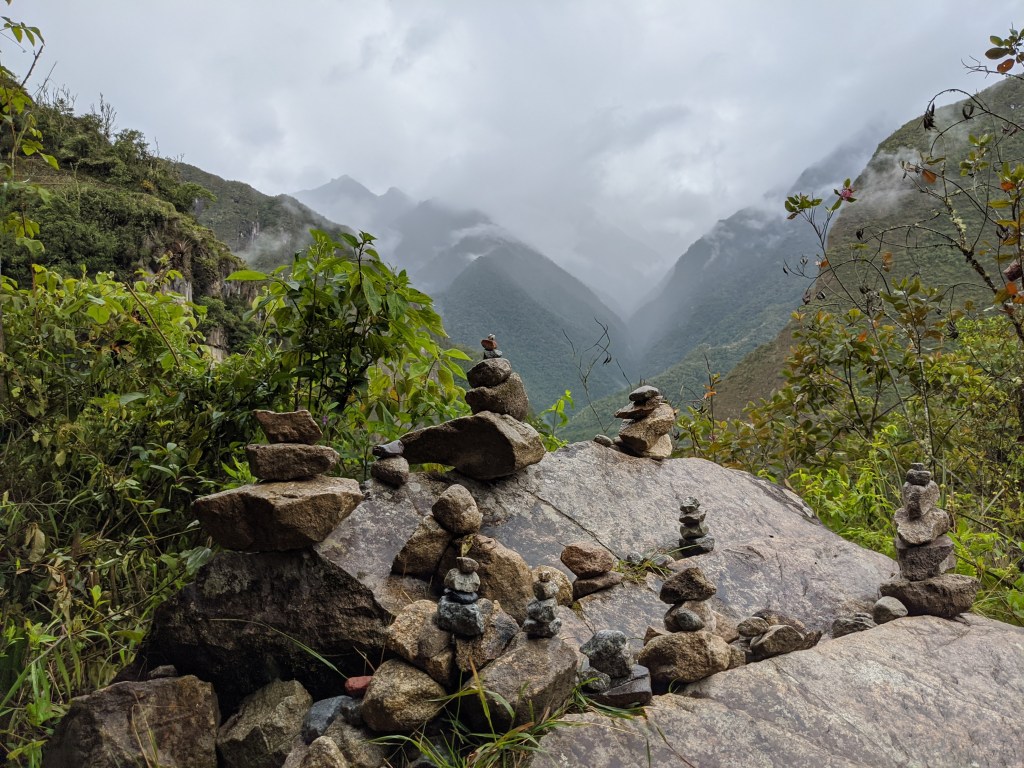
On Machu Picchu itself, the altitude isn’t bad, but that doesn’t mean it’s an easy walk, either. It’s 1,200 feet of stairs. That’s a workout on the legs even if you’re going downhill. It took us about an hour and a half – longer than my Google search led me to believe it would – and by the end my legs were shaking whenever we paused for a water break.
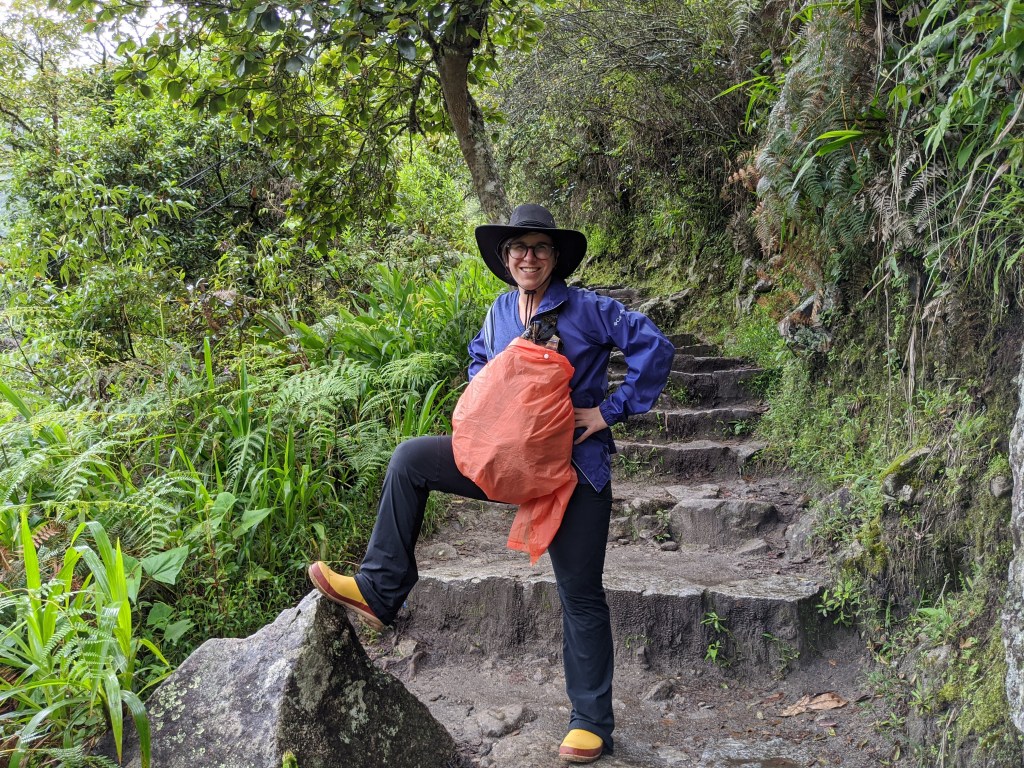
Overall, though, I really liked this route. I found it much less scary than the shuttle. Though we got to peek out at the view occasionally, it had a jungle feel with lush trees all around making me feel safe and grounded.
For some, this might be a disadvantage. For me, it was helpful.
Some hikers passed us and, at their speed, probably took half the time going down, but I’ll admit I was a bit out of shape.
Both my partner and I are glad we didn’t walk up. We passed many people walking up to Machu Picchu and they looked miserable. It was a humid day – Machu Picchu includes characteristics of both the mountains and the jungle – and they were soaked.
I would encourage them early on with an “almost there” or “casi ahí,” but the farther from the top we got, the more desperate they seemed (it was mid-afternoon by then, rain was coming down intermittently and the heat was at its peak) and I didn’t have the heart to tell them how much farther they had to go.
I think we made the best choice as able-bodied, budget travelers. We saved some money on the trek down but didn’t exhaust ourselves before the big reveal.
Tickets: Getting into Machu Picchu
There are three ticket options for Machu Picchu’s citadel:
Basic Ticket
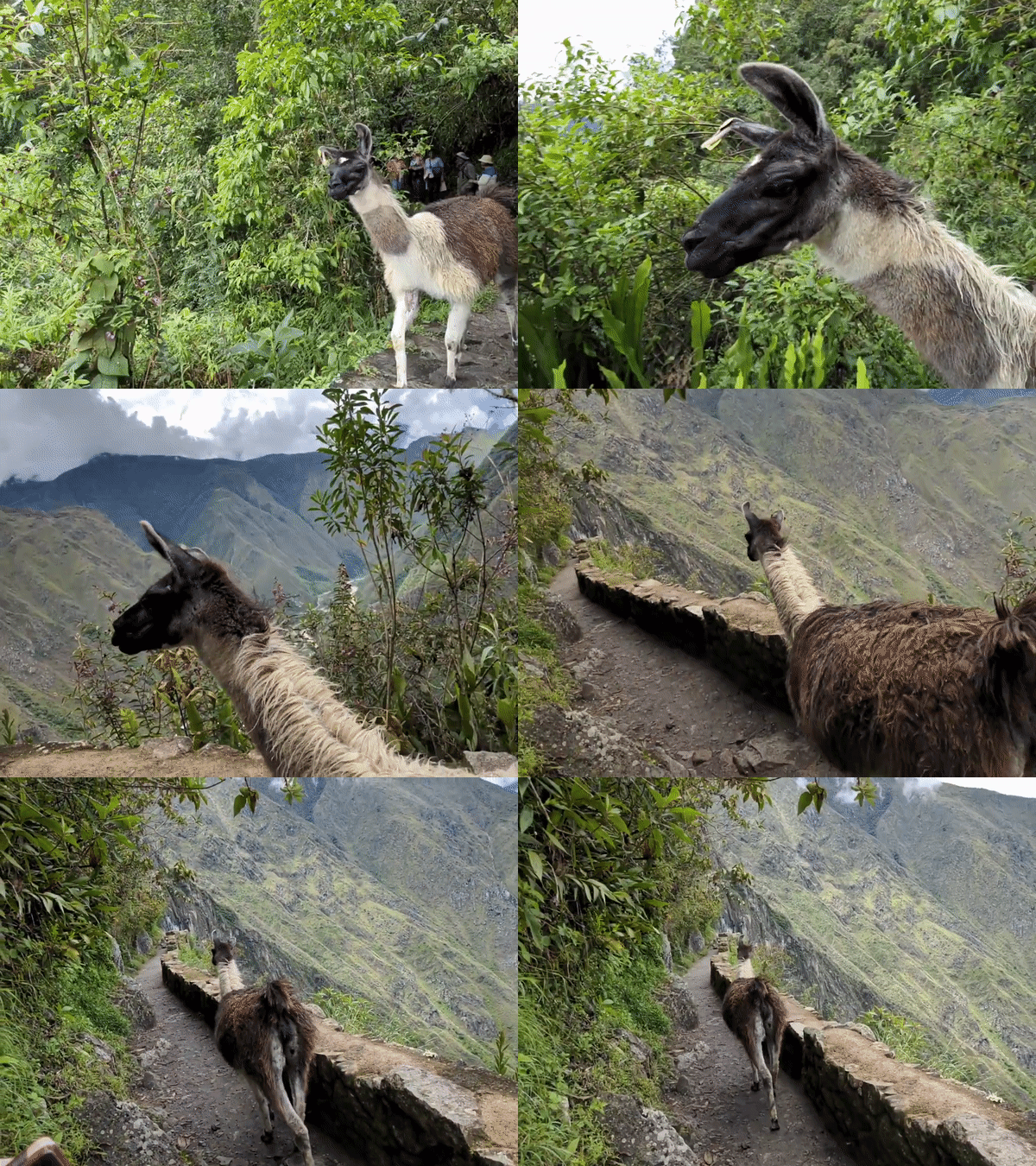
This is the ticket that we got. This Machu Picchu ticket includes access to the archaeological site with its famed llama-inhabited terraced landscape and remnants of old temples and homes. It doesn’t include Huayna Picchu or Machu Picchu Montaña, but that doesn’t mean you can’t get in some unique hiking experiences away from the crowds.
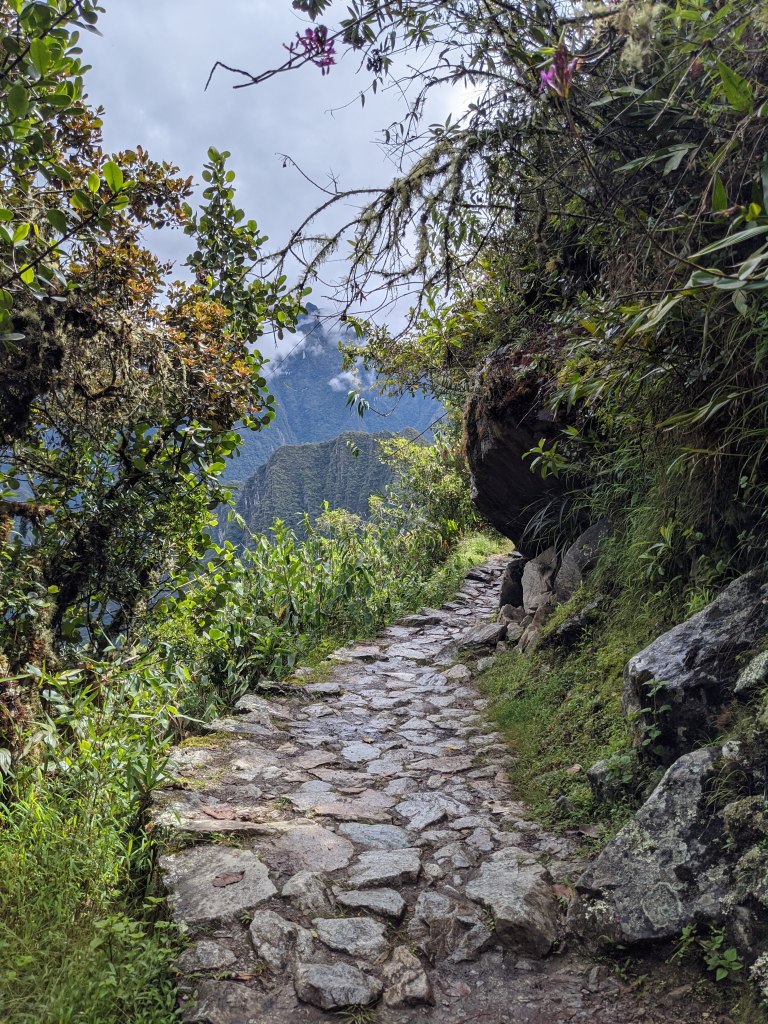
Hike out along a lush pathway out to the Sun Gate (also called Inti Punku). We were among only a few people out this way and we were taken by the beautiful views, the surprisingly loud rushing of the river at the base of the mountain, and wildlife.
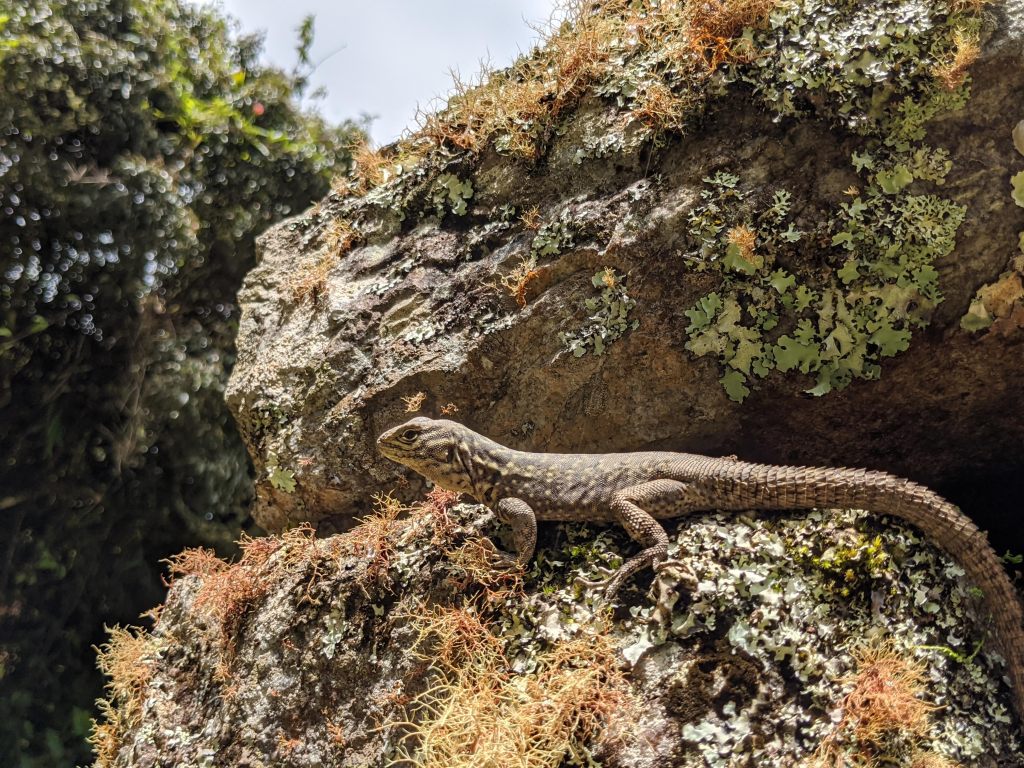
We saw these beautiful iridescent butterflies that shimmered from purple to blue to white, lizards basking in the sun, and an impressive hive of bees (which were well off the path, so no fears there). Our friends even saw a wild chinchilla! Color me jealous.
They recommend booking this ticket 1-3 weeks in advance. When we booked, tickets weren’t available more than a month in advance. The tickets are available at hour intervals throughout the day and are good for four hours per visit.
Machu Picchu and Huayna Picchu
Overlooking the Machu Picchu archaeological site, this addition includes entry to the short but intense Huayna Picchu. Featuring a set of steep stone stairs that were built 500 years ago, the nicknamed “stairs of death” aren’t for the weak-kneed like me. In reality, there have been no recorded deaths on this hike, but it is quite intimidating to look at. That being said, our friends who took this route (on a cold, cloudy, rainy day nonetheless) were happy they did. And their pictures do look incredible.
These tickets are available at hour intervals in the morning only. They allow for 6 hours in the park upon entry. They recommend booking these tickets up to three months in advance.
Machu Picchu and Machu Picchu Mountain
A longer but less steep hike, this is a nice medium. Ending in the highest point at Machu Picchu, those who are used to casual hiking should be able to complete this route at their own pace. All ages are welcome. This ticket doesn’t have to be bought as in advance as Huayna Picchu, so you can decide to add it on when you buy your ticket 1-3 weeks in advance. Because this hike is longer, you get 7 hours upon entry. Entry times are all in the morning.
The Wrap-Up
Machu Picchu is well worth the visit. If you have any questions about visiting Machu Picchu, please post them in the comments!
But, as a reminder, there are many great ruins in Peru and you won’t want to settle for just one! Don’t miss out on future posts about Cusco-area ruins like Sacsayhuaman.
Until next time, Mel
 The Scaredy-Cat's Guide to Travel
It’s my dream…
LikeLike
I hope you get there soon, it’s so worth the trip!
LikeLiked by 1 person
Yes! Just have to wait when this stupid virus leaves us for ever 🙂
LikeLike